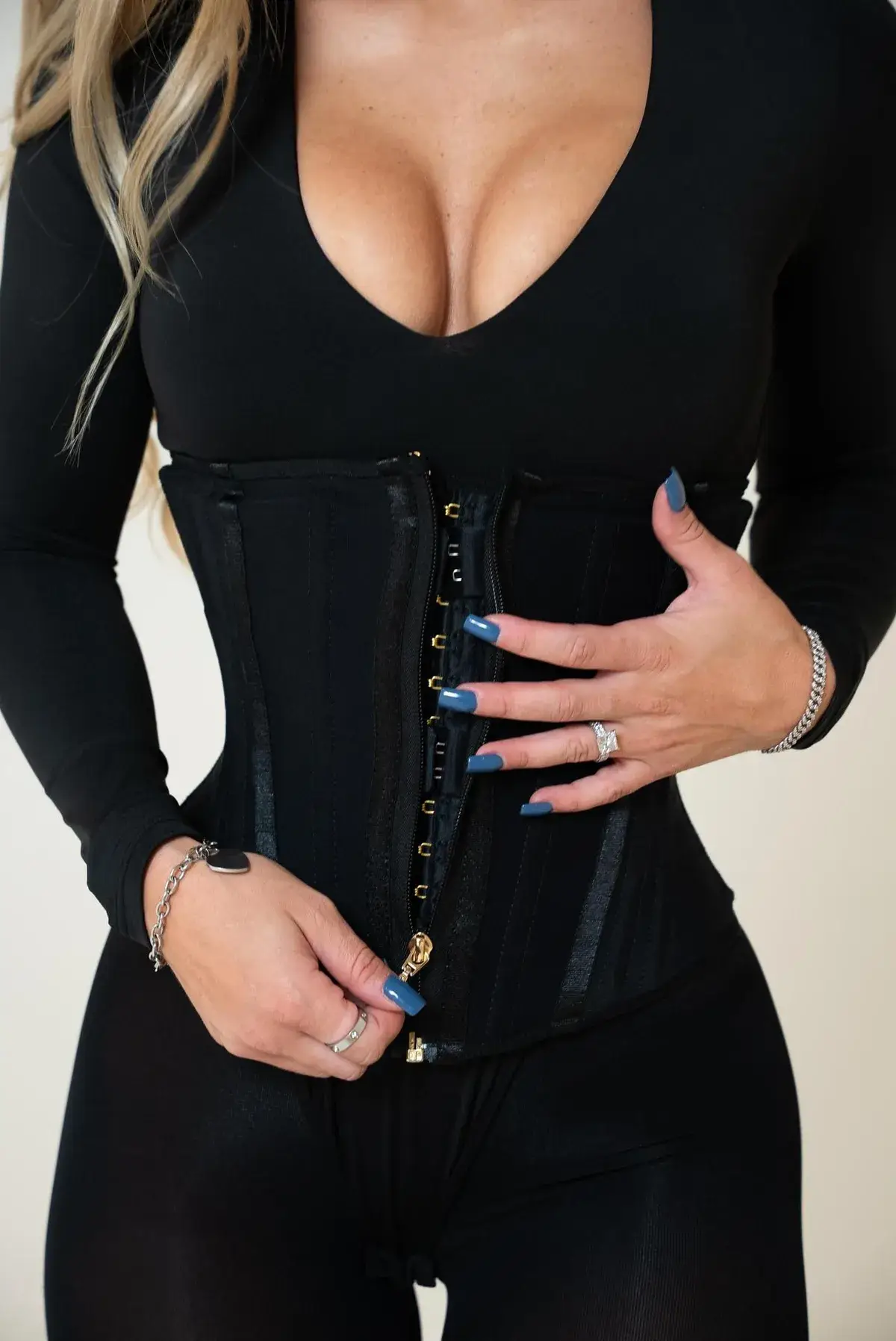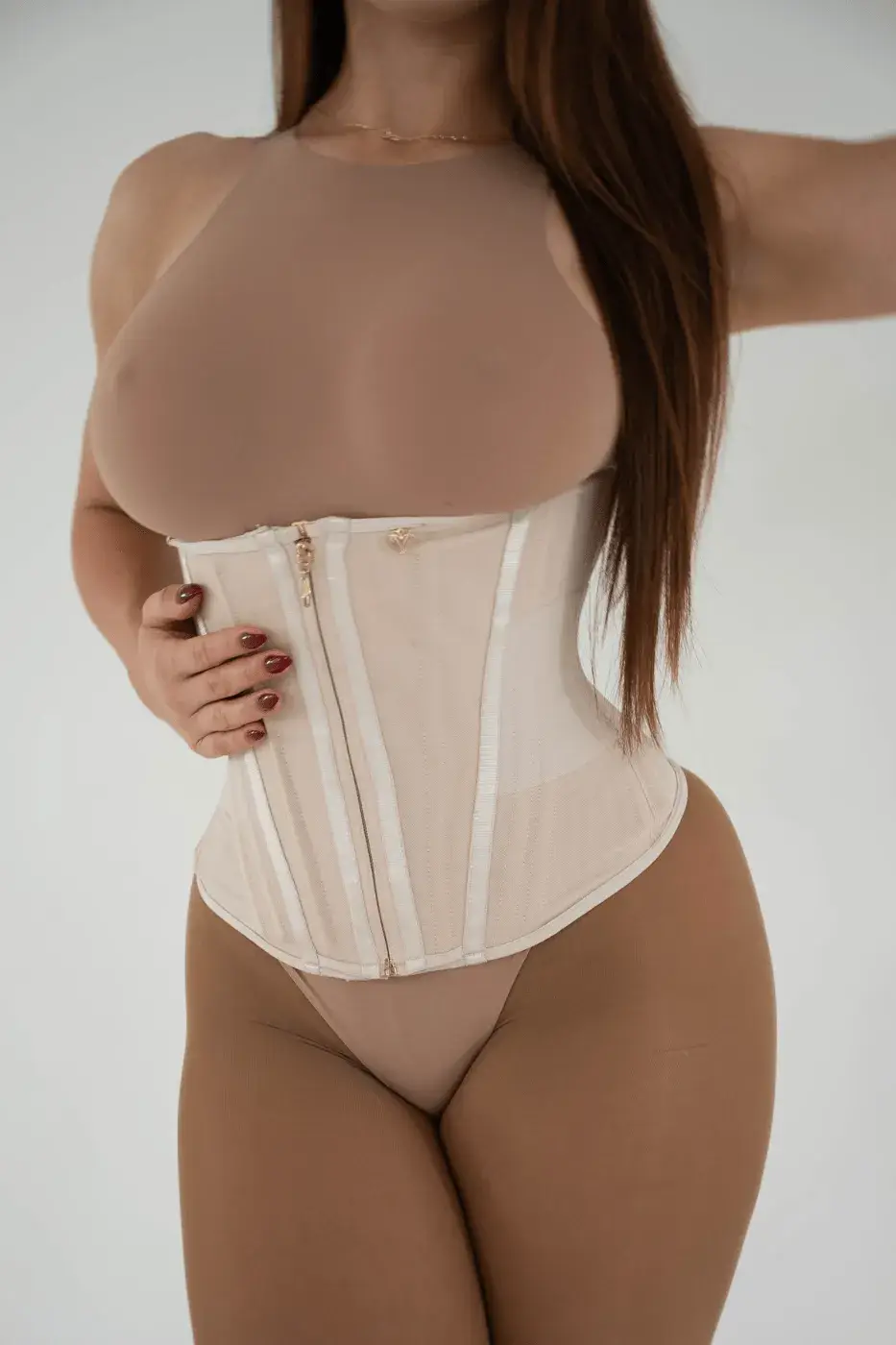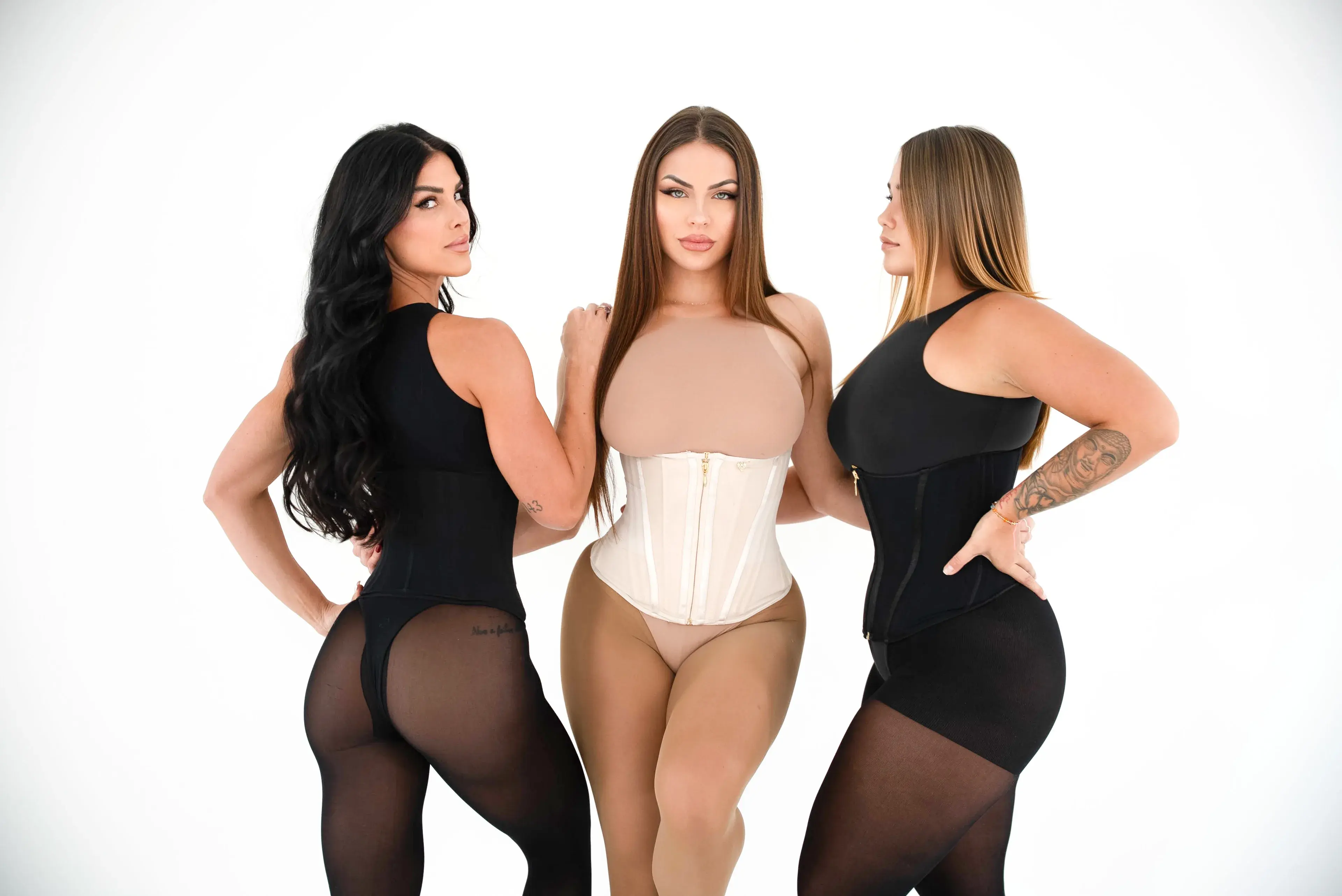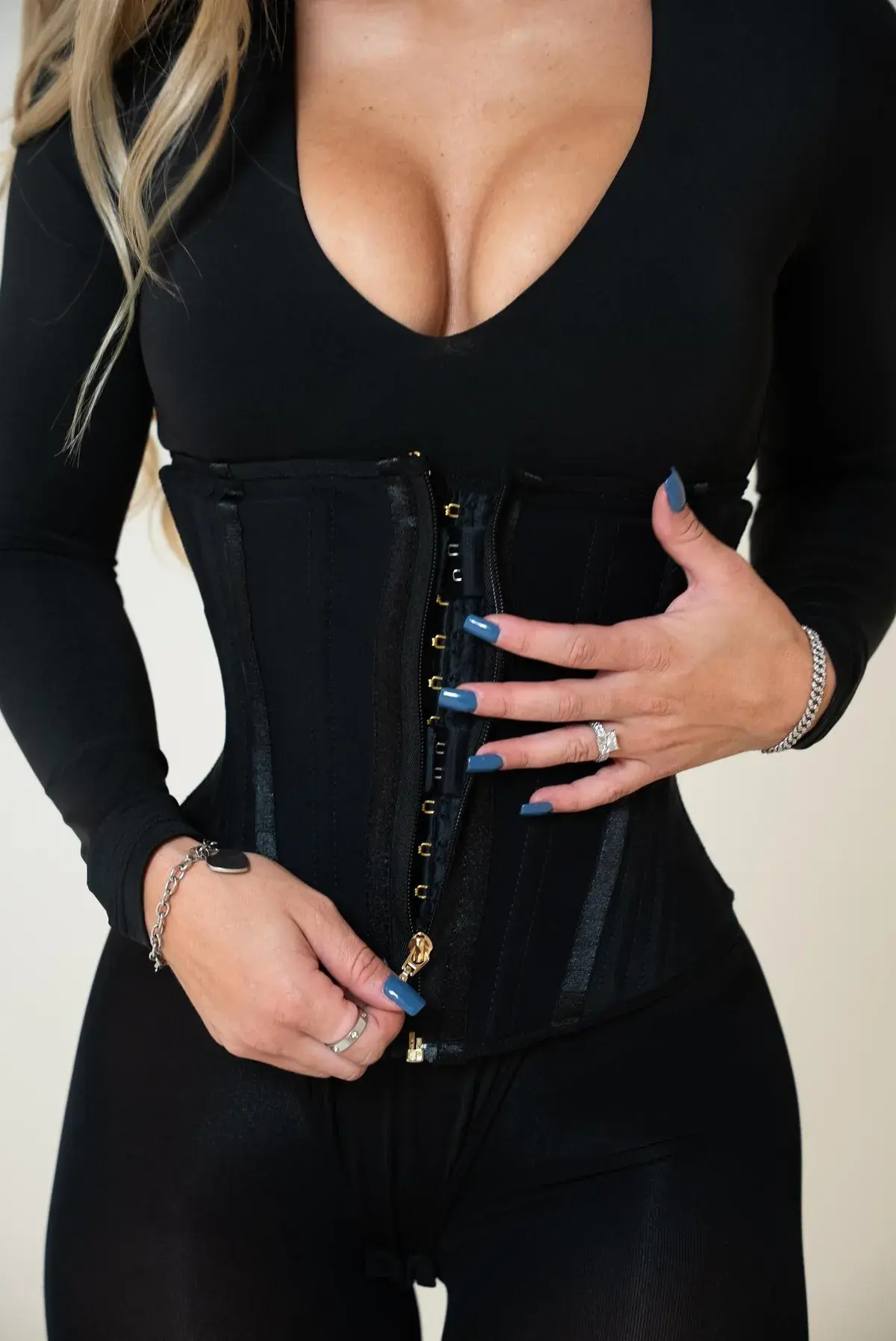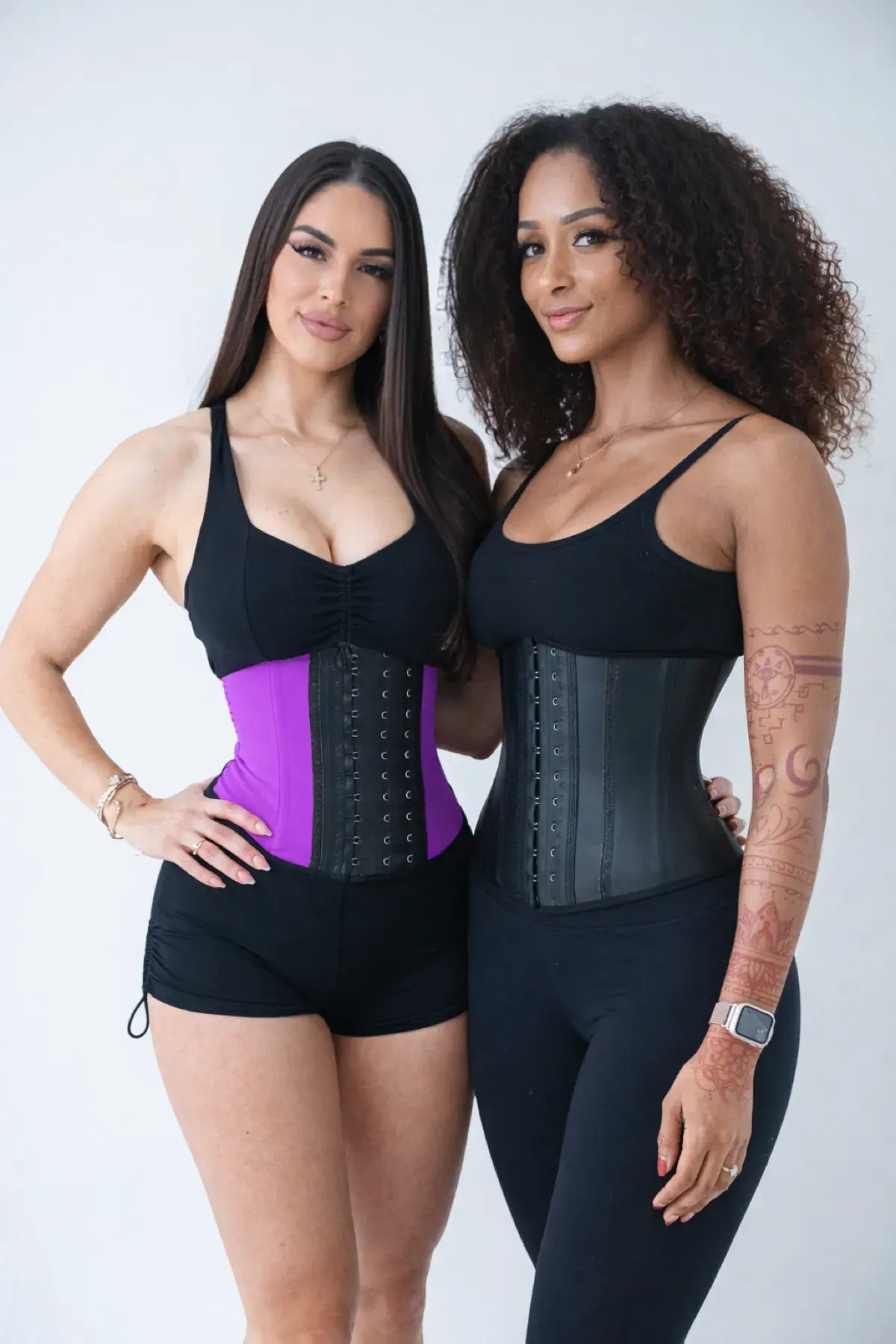
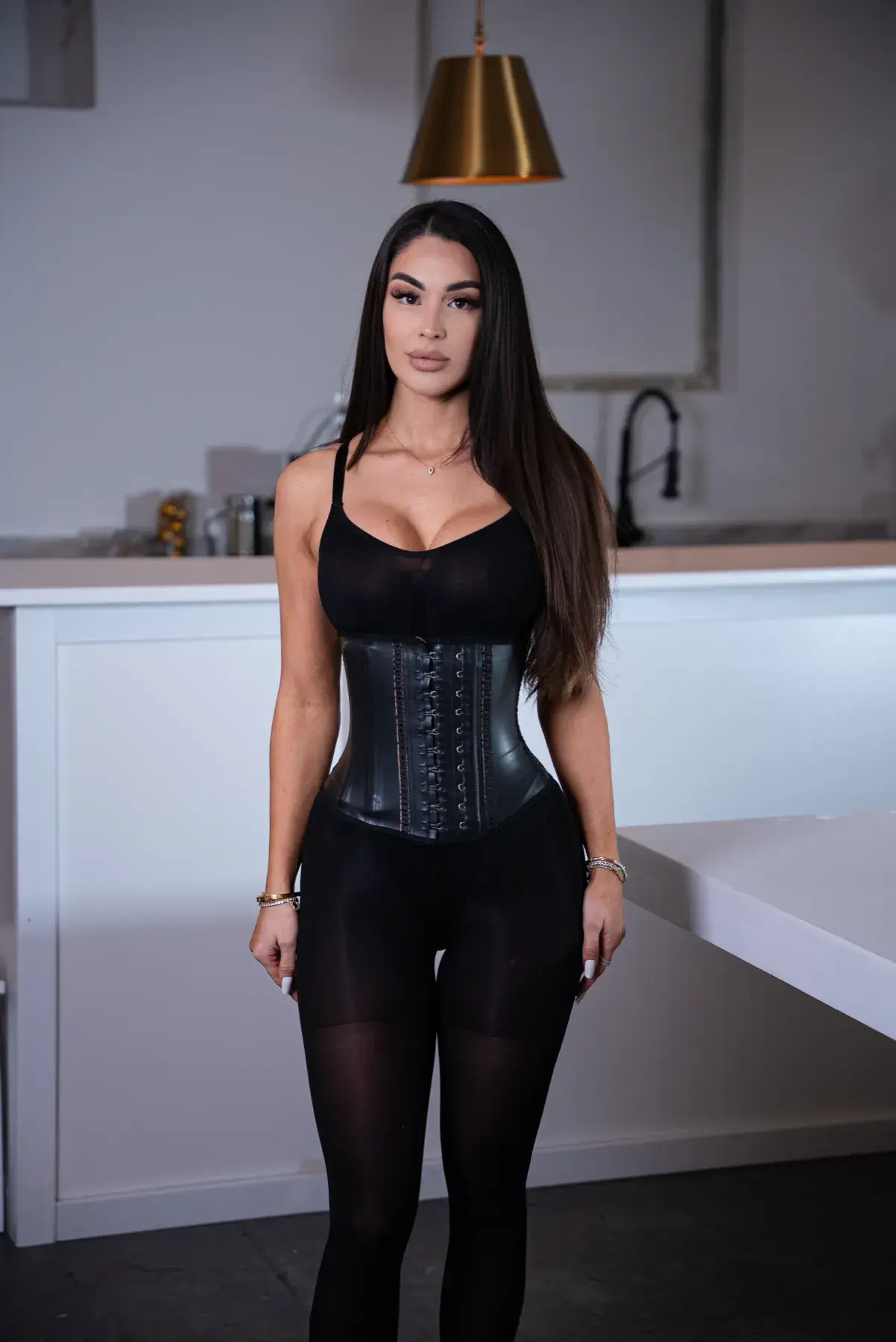
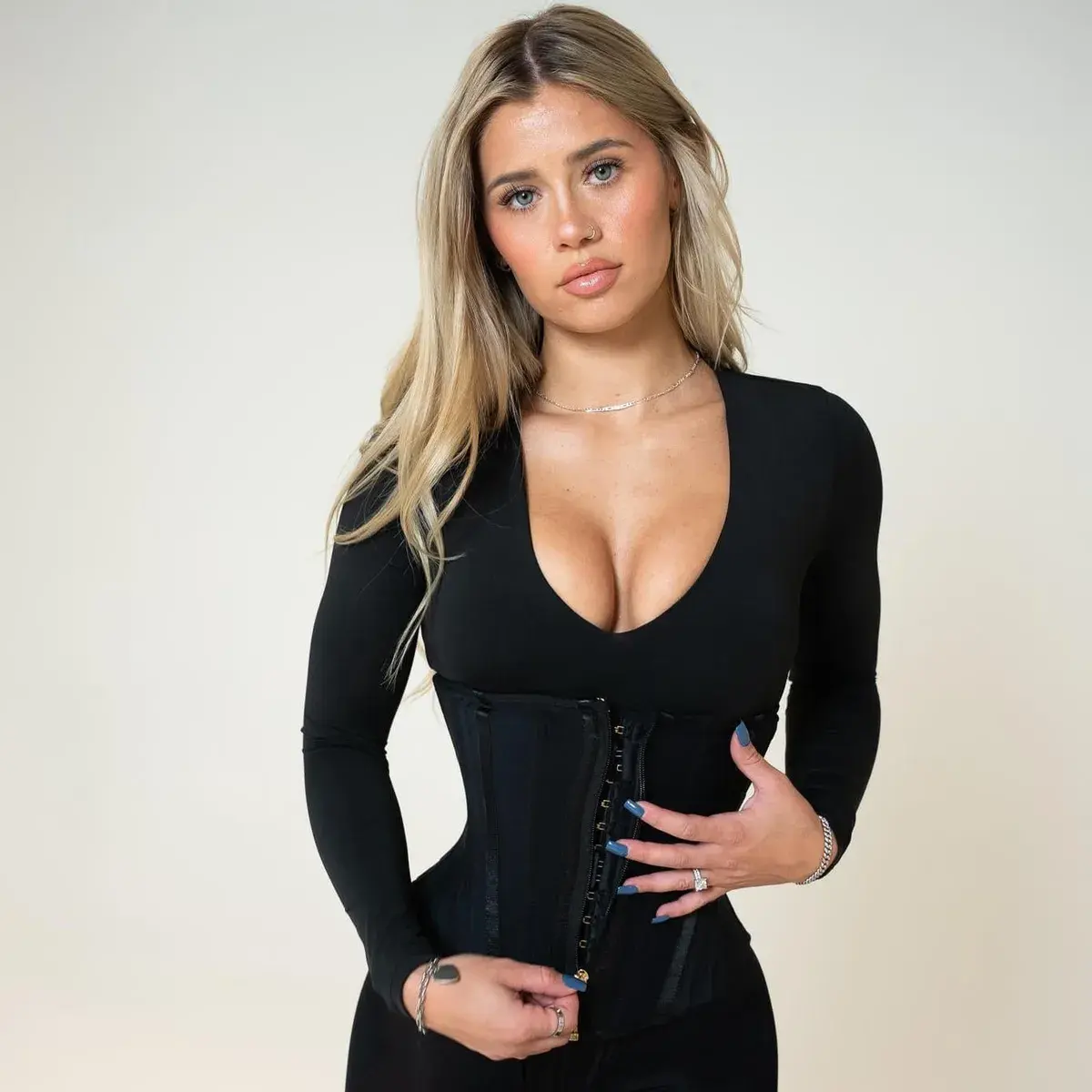
A waist trainer is a firm compression band worn around your midsection. Most are made of latex or a latex-free stretch mesh called powernet, with boning and rows of hooks or a zip. It pulls your waist in while you wear it for a more defined shape and a supported feel. The shaping stops when you take it off.
We design and sell waist trainers, and we answer fit questions from customers every day. This guide covers the parts of a trainer, the materials, why torso length matters as much as size, what a trainer can't do, and how to pick your first one.
What does a waist trainer do?
- Shapes your waist while it's on. The firm panel pulls your middle in and gives you a more hourglass outline the moment it's closed.
- Gives a feeling of core and posture support. The stiff front makes you more aware of how you sit and stand. Customers mention this a lot.
- Smooths your shape under fitted clothes. A trainer that fits your torso lies flat under a bodycon dress, scrubs or a tucked-in top.
- Feels snug during workouts. Many people like the hugged feeling during cardio and light circuits. That's a feeling, not a performance boost.
“Super tight and makes me feel sexy sexy. Helps with my posture. The material is amazing. I love this brand. Your paying for quality... not quantity.”
How does a waist trainer work?
Three parts do the work. Once you know what each one does, a well-made trainer is easy to spot.
The compression panel
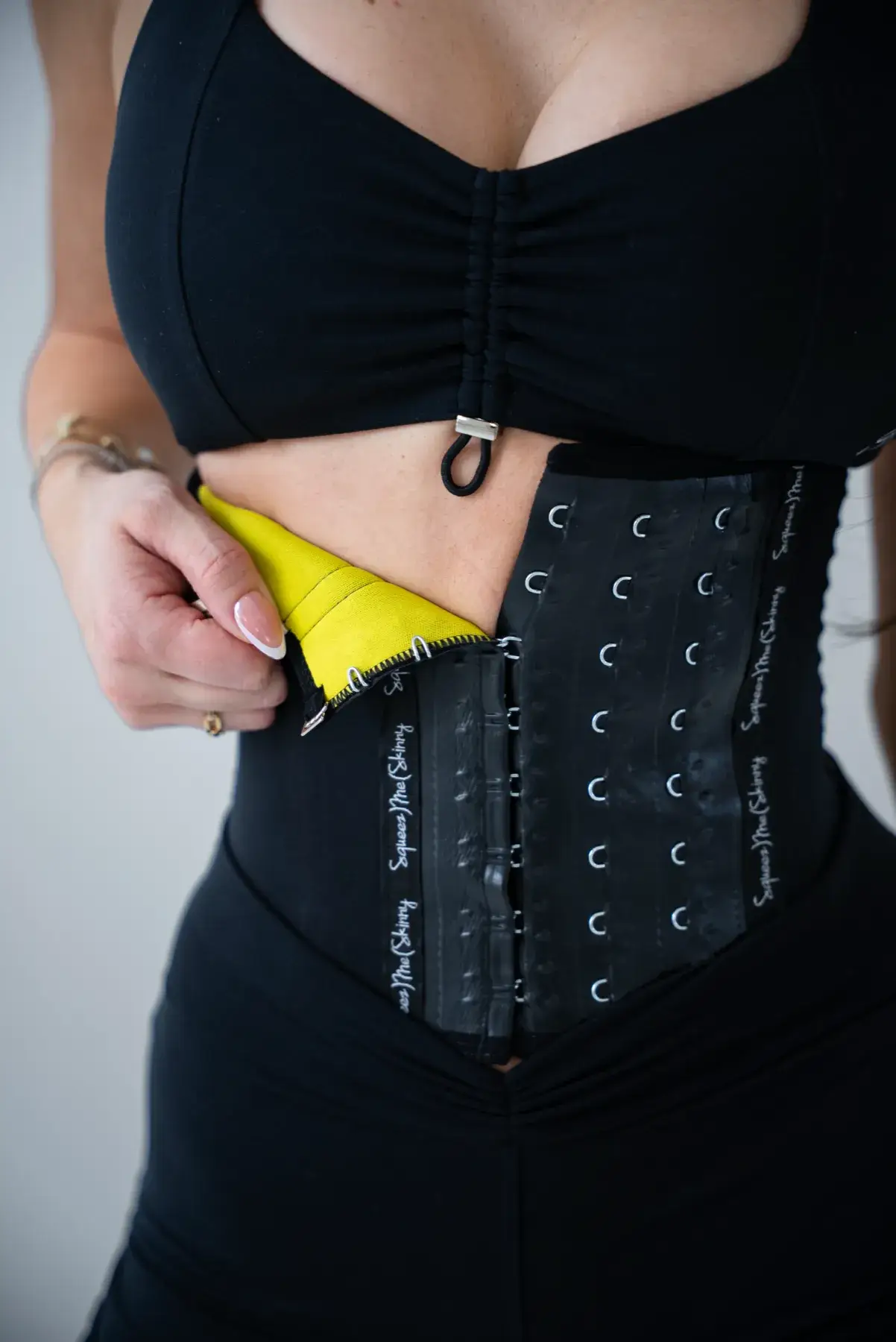
This is the body of the trainer: latex, a latex outer with a neoprene lining, or powernet. It's what squeezes. Thicker and firmer means more hold. Our Daily Sculpt uses firm latex for all-day hold, while the Active Sculpt uses a more flexible latex that bends when you squat or twist.
The boning
Thin vertical bones are sewn into channels around the trainer. They stop the band from folding over when you sit and keep the top and bottom edges from rolling. When a cheap trainer rolls into a tube at your belly button, missing or weak boning is usually part of the reason. The other part is length, which we cover below.
The closure
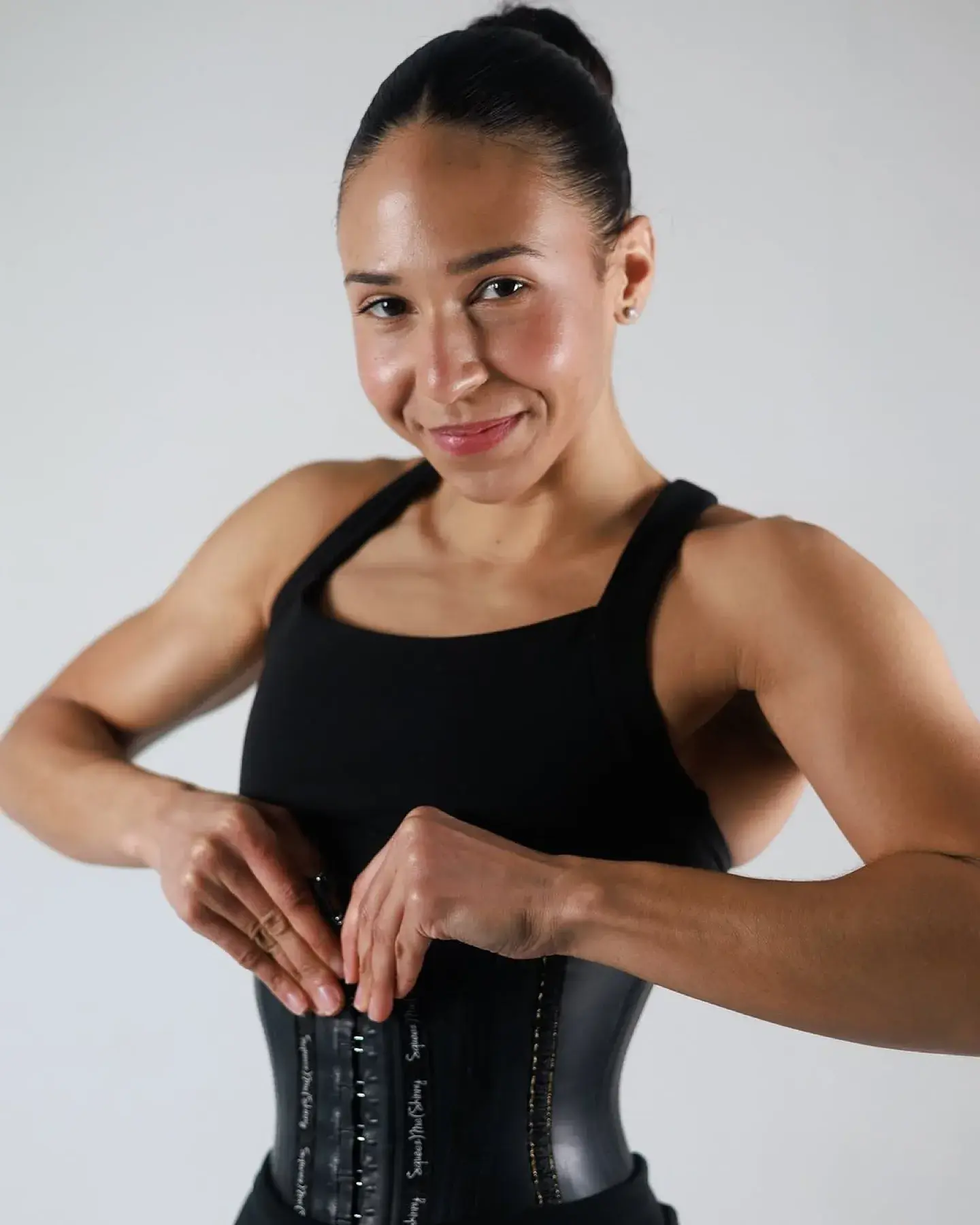
Most latex trainers close with hook-and-eye columns down the front. Ours have three rows, so you can start on the loosest row and move in as the latex softens over the first few wears. Some trainers add a front zip for a faster, firmer close, like our Triple Compression. Our guide to waist trainer hooks explains which row to start on and when to move.
What are waist trainers made of?
| Material | How it feels | Best for | Our trainers |
|---|---|---|---|
| Latex | Firm and springy, grips and holds its shape | Everyday hold and workouts | Active Sculpt, Daily Sculpt, Triple Compression, Men's V-Taper |
| Latex outer, neoprene lining | Firm outside, warm and padded inside | Sweaty cardio days | Neoprene Sweat & Sculpt, Men's Neoprene |
| Powernet (latex-free) | Smoother, more corset-like | Latex allergy, sensitive skin, outfits | Luxx Hourglass, Invisible Zip & Clip |
If you're choosing between the first two, read latex vs neoprene waist trainers. If you have a latex allergy, our latex vs latex-free guide lists which trainers are safe to choose. Our neoprene trainers have a latex outer, so they aren't latex-free.
Why torso length matters as much as size
Waist size tells you how wide a trainer should be. Torso length tells you how tall. Get the height wrong and the trainer will dig into your ribs or hips, then fold over to find room. It's the complaint we hear most, and the fix is usually a different length.
Our torso length guide shows where to put the tape. If you're petite or short-waisted, see waist trainers for a short torso.
“Legit the first and only waist trainer that actually compresses and doesn’t roll!!”
What a waist trainer doesn't do
- It doesn't change your body fat. Compression moves soft tissue while the trainer is closed. Nothing is removed.
- The shape doesn't stay. Take it off and your waist goes back to how it was. Wearing it for more hours doesn't change that.
- Sweat isn't progress. Latex and neoprene trap heat, so you sweat more. Cleveland Clinic notes that sweat is mostly water and electrolytes, and that weight comes back once you rehydrate.
- It doesn't train your core for you. It can remind you to sit up straight. The strength comes from your own training.
We wrote a longer, honest answer to do waist trainers work if you want the full picture.
Waist trainer vs corset vs shapewear
A waist trainer is latex or powernet with hooks and gives as you move. A traditional corset uses rigid boning and laces and holds a fixed shape, so it doesn't bend through a workout. Shapewear is lighter stretch fabric made to smooth, not cinch. Our Luxx Hourglass sits between a trainer and a corset: latex-free, with a zip and hook-and-eye closure. The full comparison is in waist trainer vs corset vs cincher.
Who shouldn't wear a waist trainer?
Don't wear one if you're pregnant. Talk to your doctor first if you've recently given birth or had surgery, or if you have acid reflux, a breathing, heart, back or digestive condition, or a latex allergy. For everyone else, take it off if you feel pain, numbness, dizziness or shortness of breath, and don't sleep in it. Our page on whether waist trainers are safe goes through the warning signs.
How to choose your first waist trainer
- Start with your goal. Workouts: flexible latex like Active Sculpt. All-day wear under clothes: firm latex like Daily Sculpt. Sweat sessions: the Neoprene Sweat & Sculpt. Latex allergy: Luxx Hourglass or Invisible Zip & Clip.
- Measure your natural waist at its narrowest point, tape level and snug. Use the chart for the trainer you want, because charts differ between lines. What size waist trainer should I get? walks through it.
- Measure your torso with the rule above and pick 8", 10" or 12".
- Plan to build up slowly. One to two hours on the loosest hooks for the first week. See how long to wear a waist trainer.
Where most people start
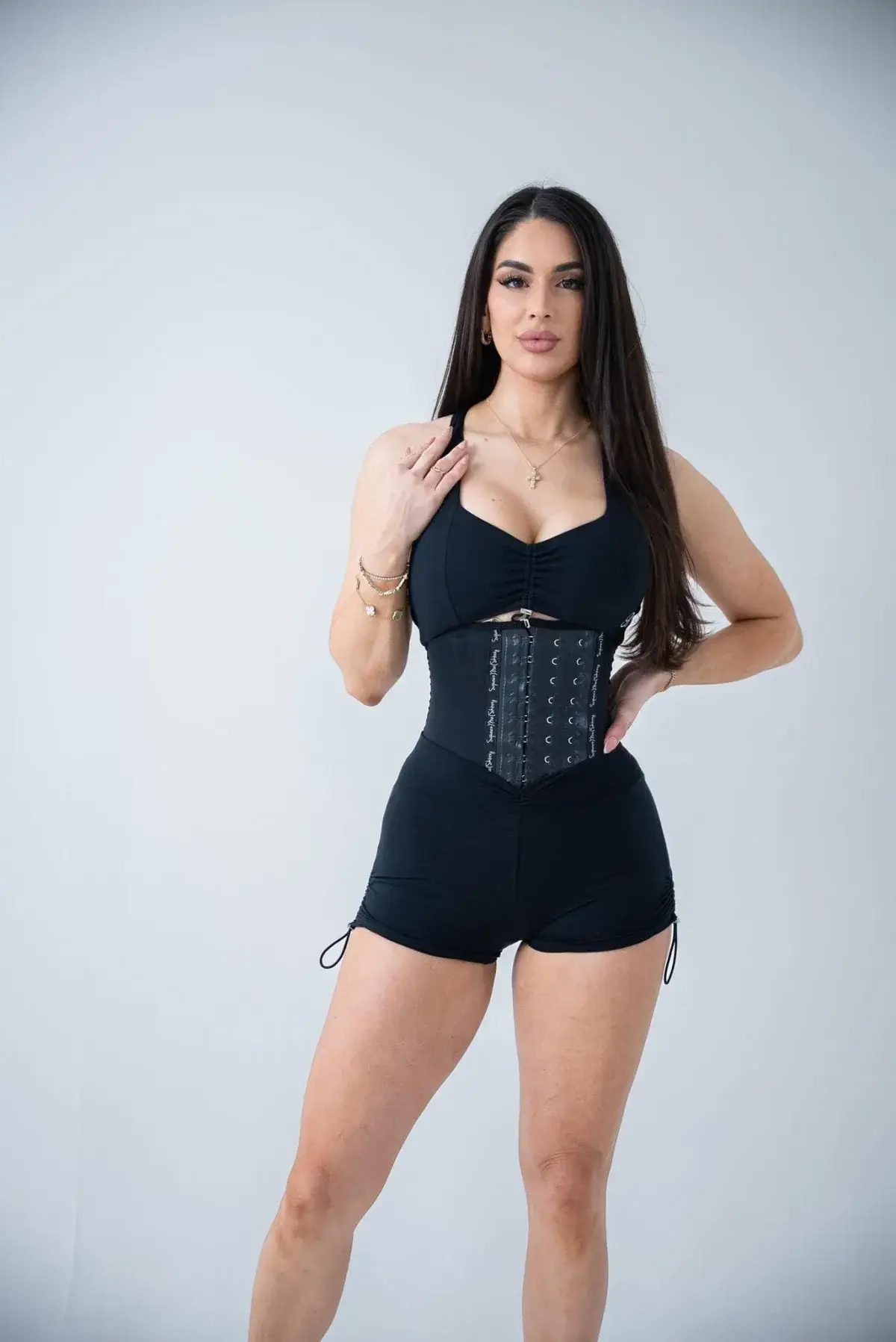
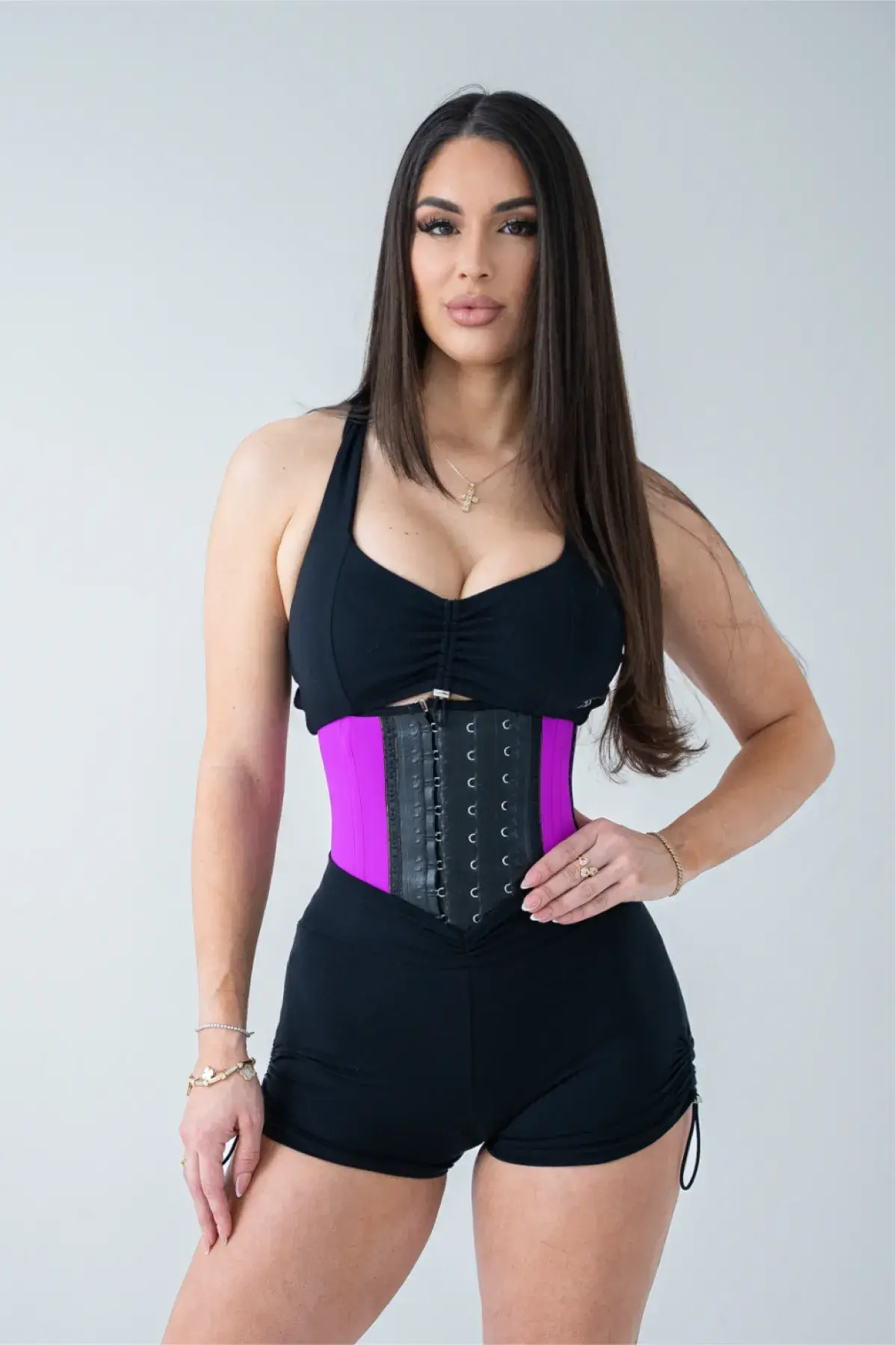
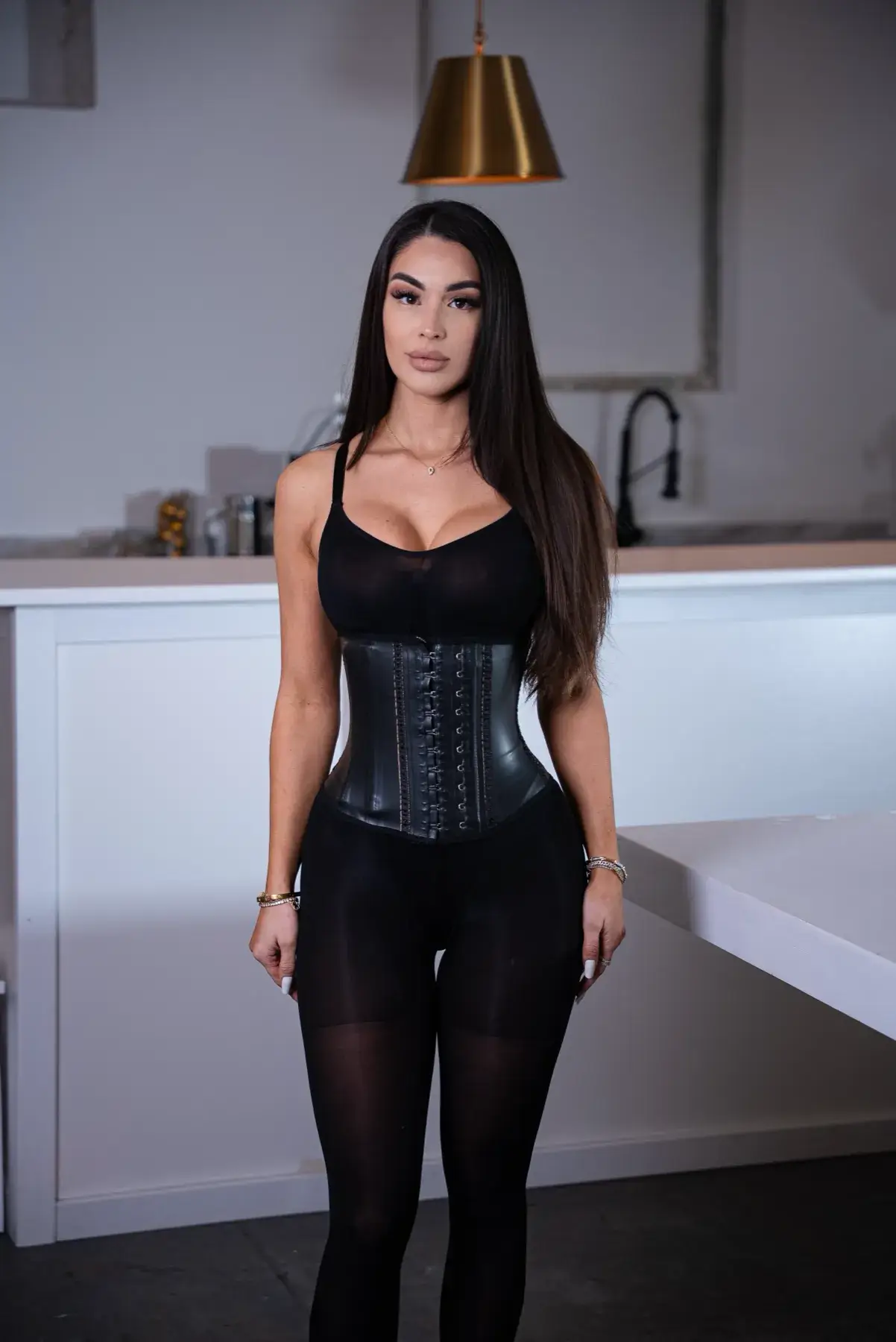
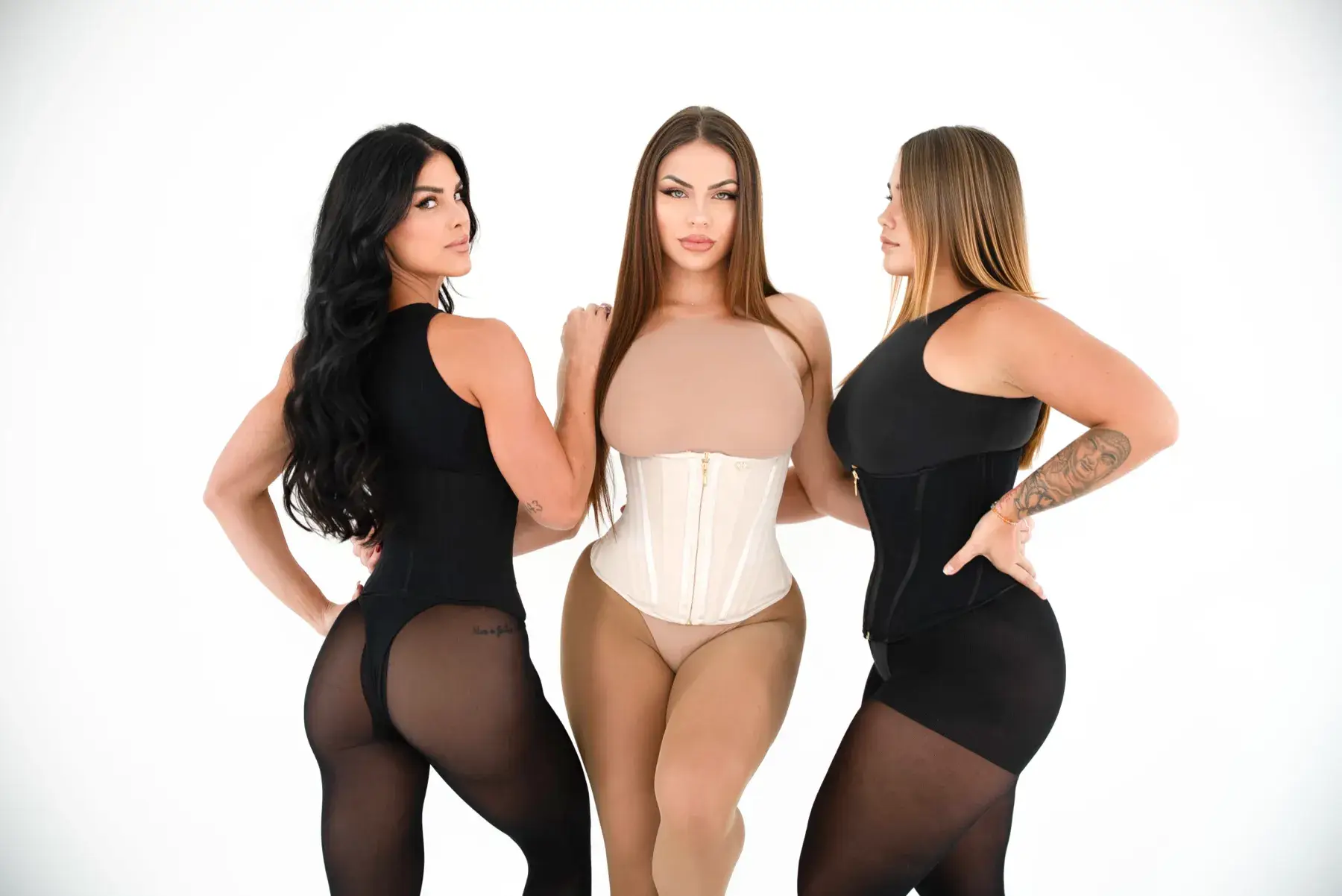

Still not sure? The Find My Fit quiz asks about your goal, waist and torso and recommends a trainer, size and length in about a minute. You can also compare all our waist trainers side by side.
Is waist training the same as wearing a waist trainer?
People use the words for the same thing. "Waist training" usually means wearing a trainer regularly. The shaping still only lasts while it's on, so there's no training effect that stays after you take it off.
How long does it take to get used to a waist trainer?
Most people need a few wears. Latex is stiff out of the box and softens with body heat. Start on the loosest row of hooks for an hour or two and move in only when that row feels easy.
Is a waist trainer the same as a corset?
No. A corset uses rigid boning and laces. A waist trainer uses latex or powernet with boning and hooks, so it moves with you.
Can men wear waist trainers?
Yes. Men's trainers are cut straighter for a men's torso. Our men's waist trainer guide covers sizing and which one to pick.
Is waist training safe?
It depends on you, the fit and how long you wear it. Build up slowly, don't sleep in it, and take it off if anything hurts. Ask your doctor first if you're postpartum or managing a medical condition.
How long does a waist trainer last?
It depends on how often you wear it and how you care for it. Hand wash, air dry flat and keep oils off latex. How long does a waist trainer last covers the signs it's time for a new one.