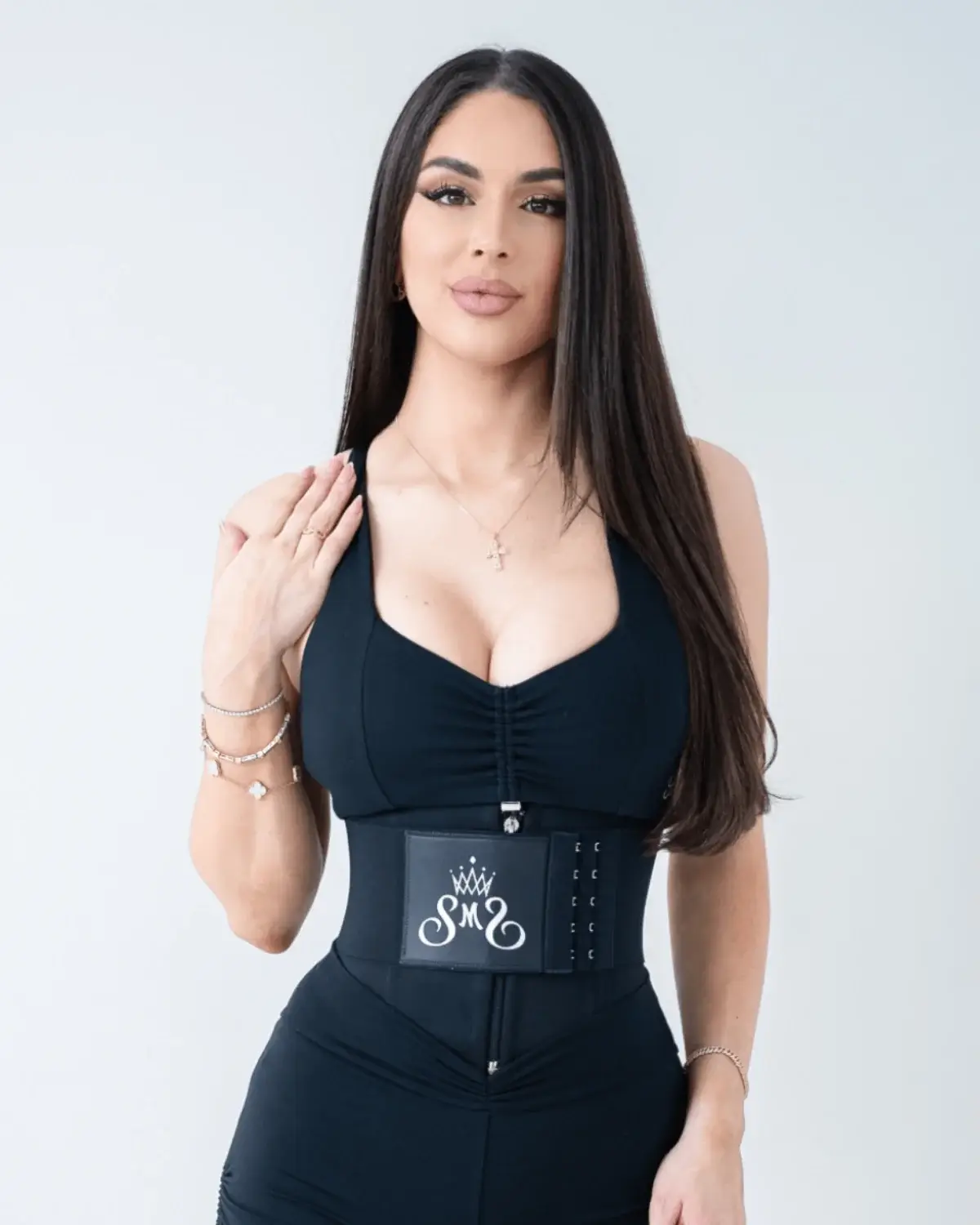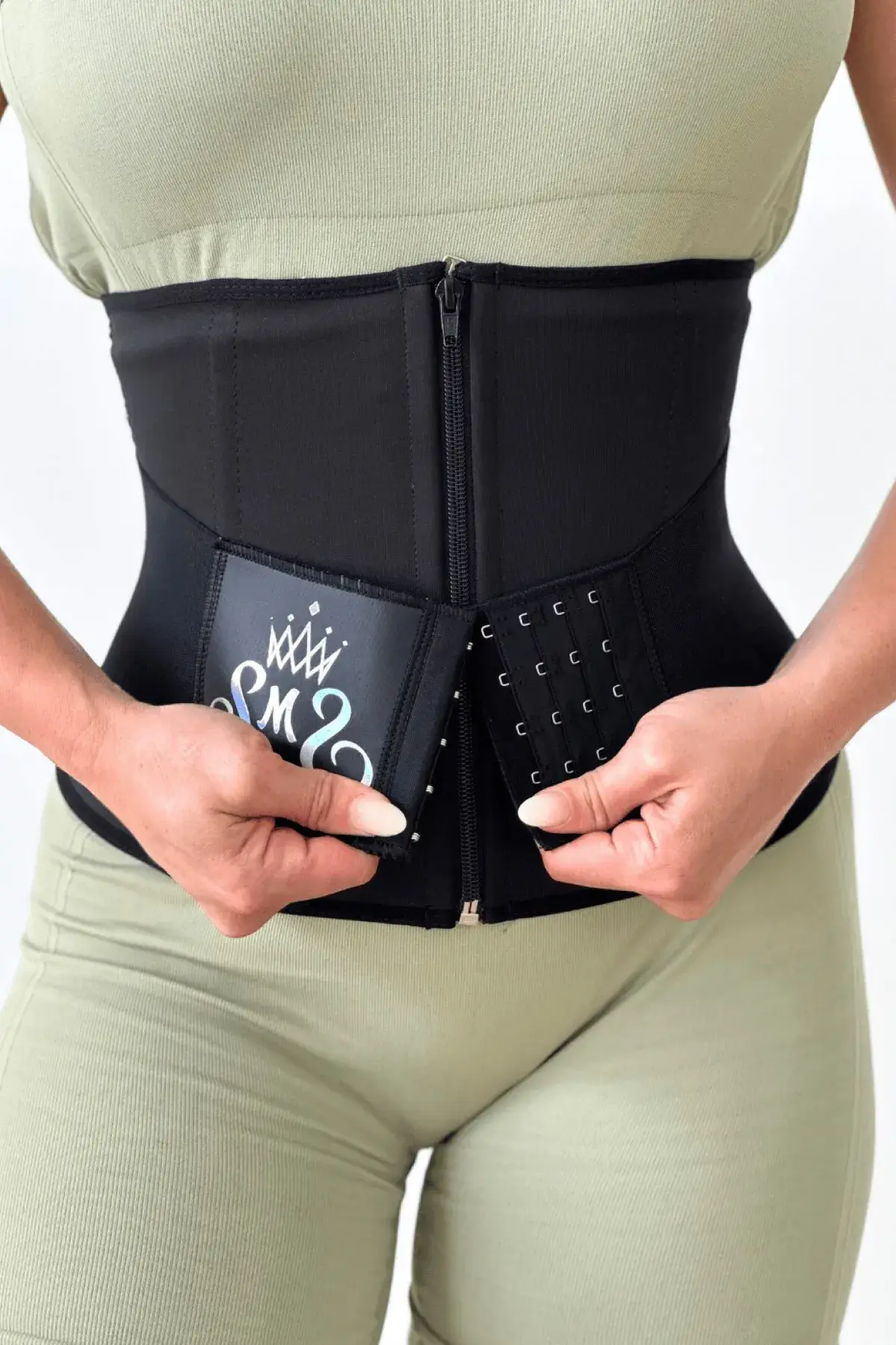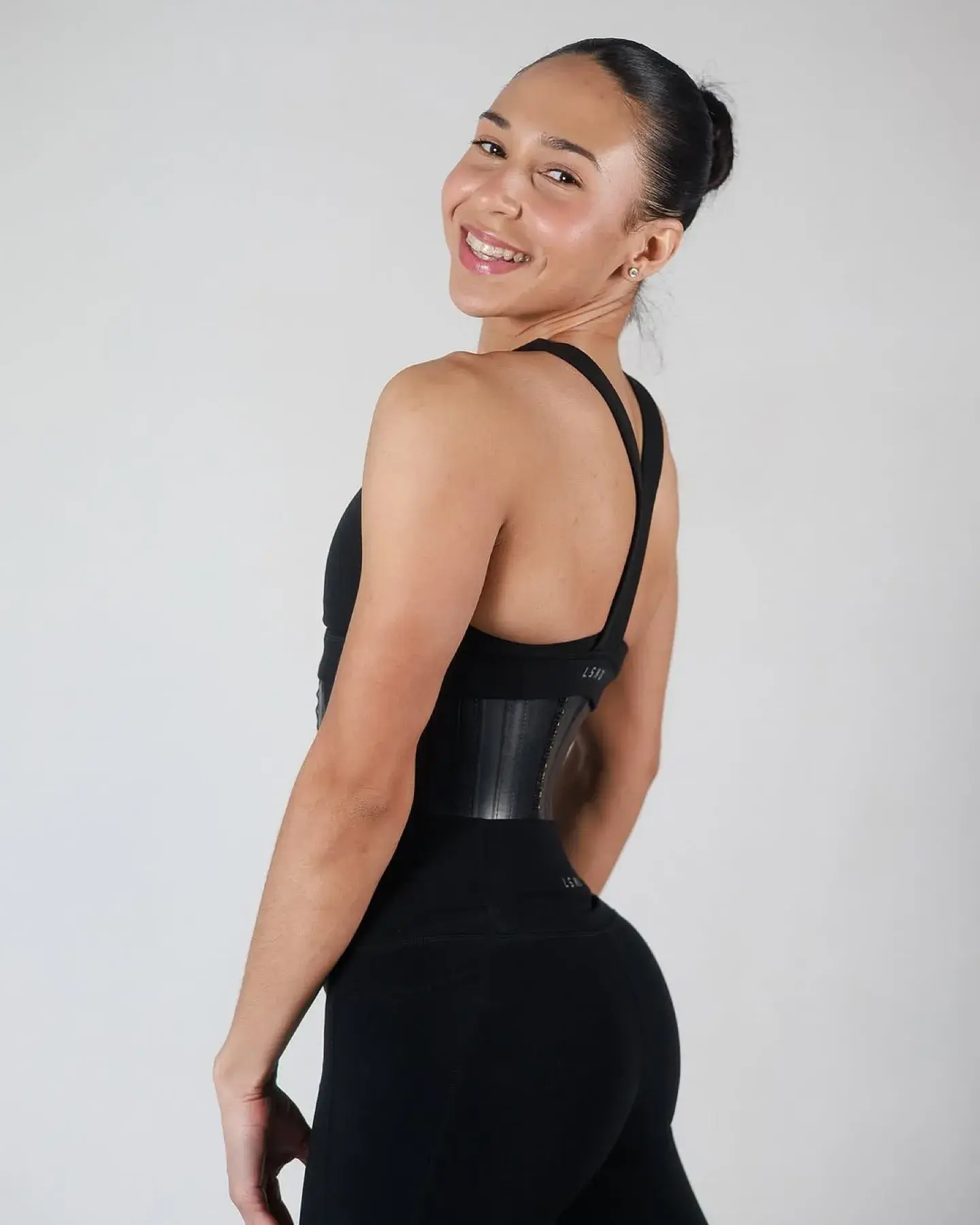
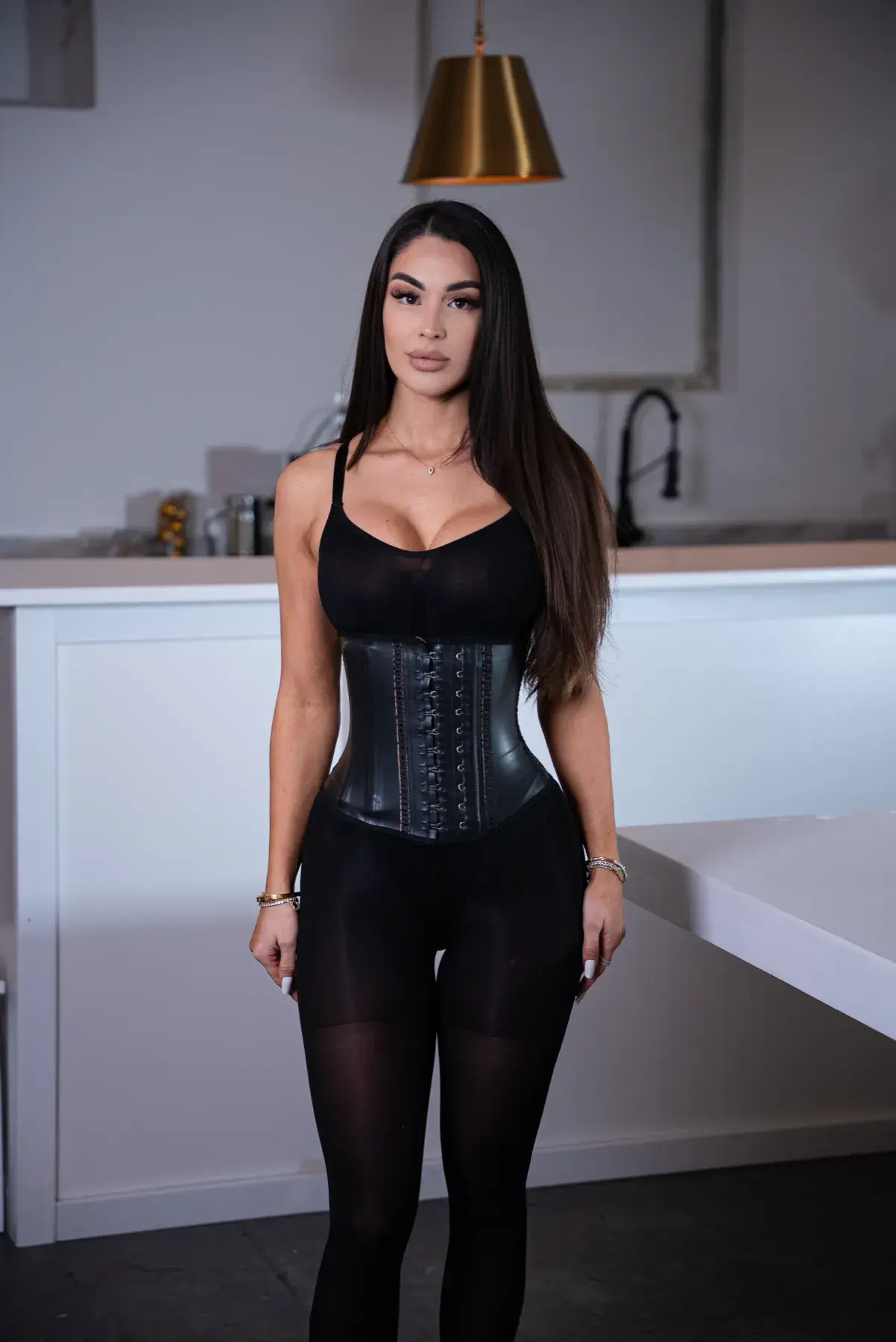
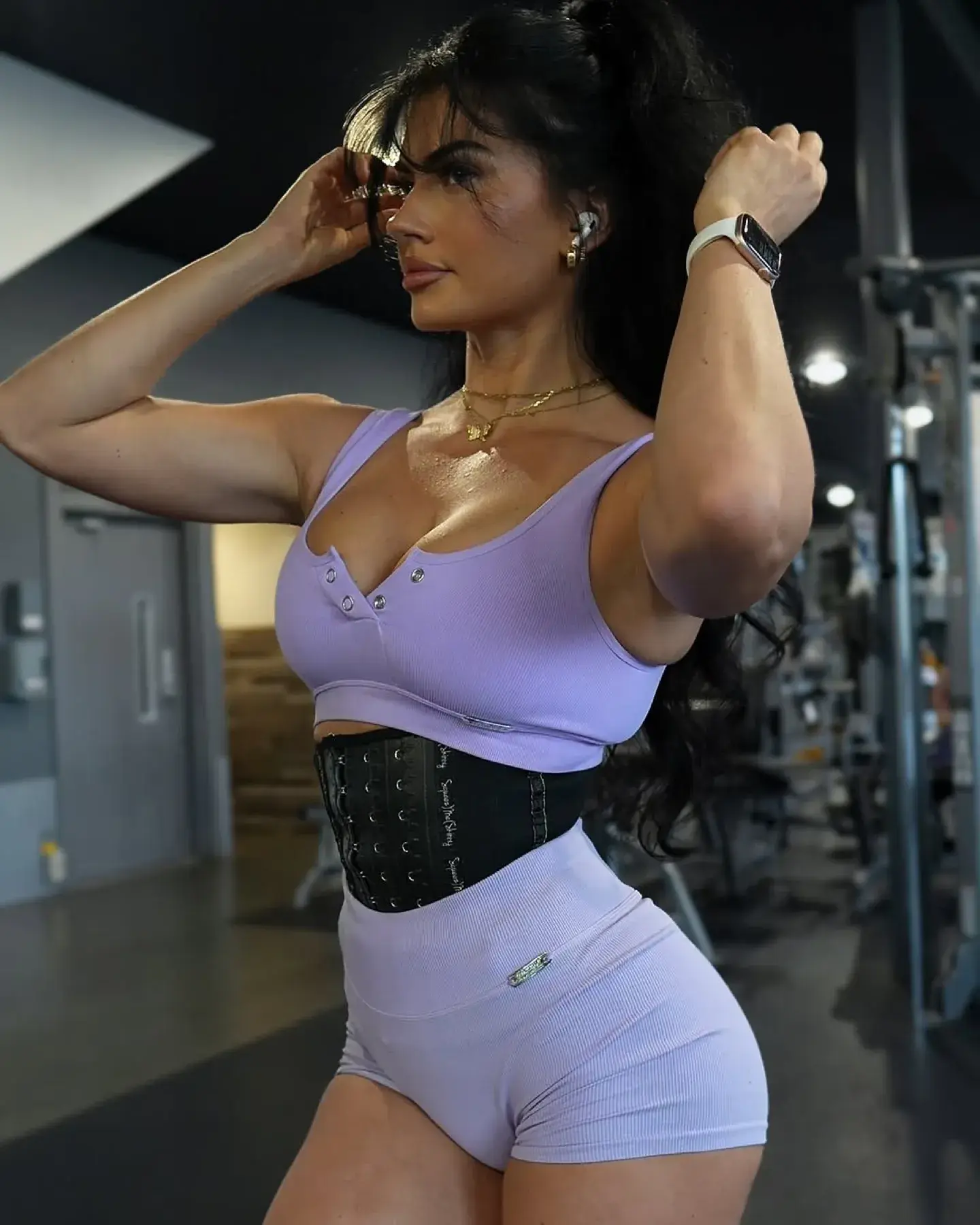
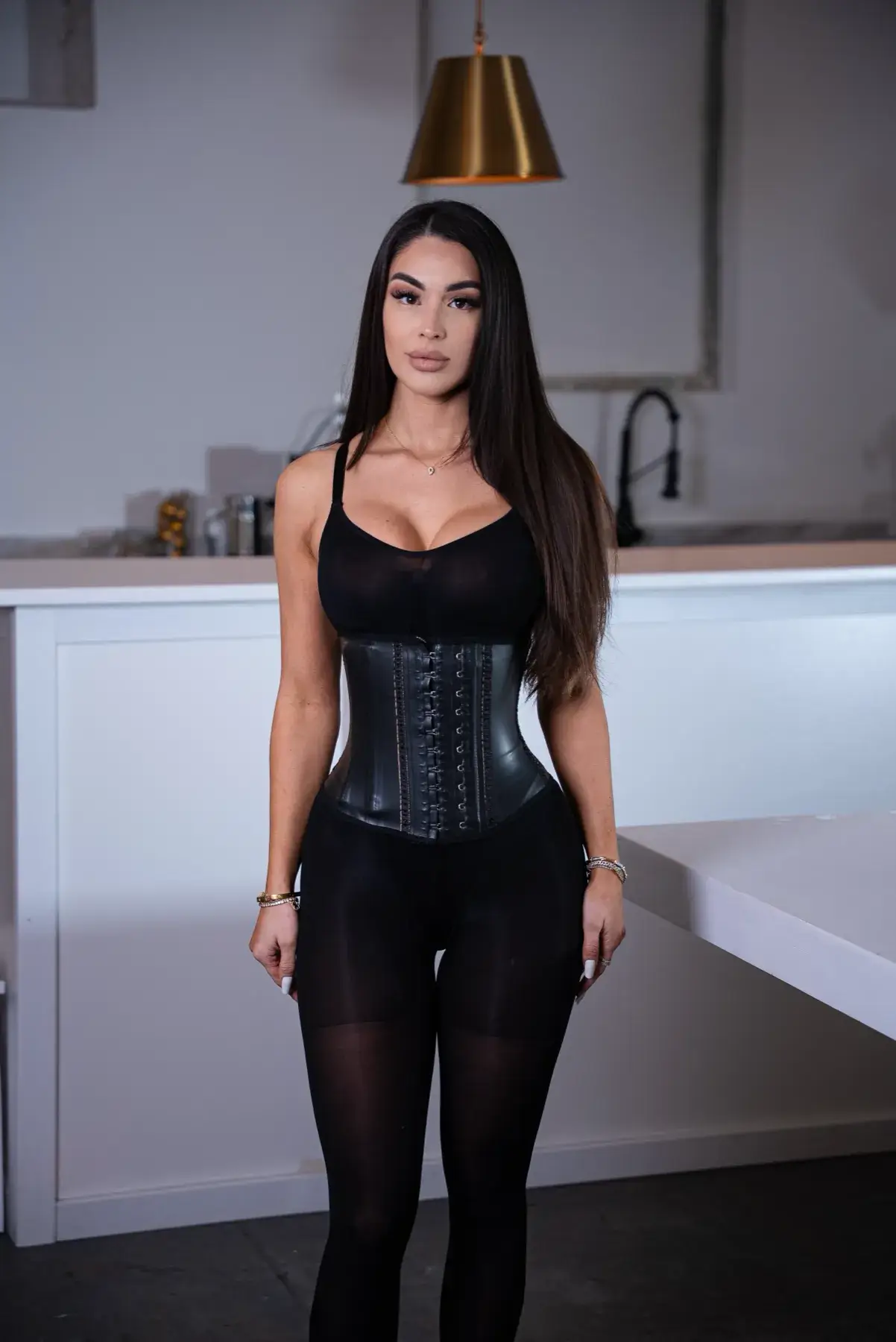
A hook-front waist trainer closes with a column of hooks that clip into one of three rows of eyes. The outermost row is the loosest. Start there, close from the bottom hook up while breathing out, and move in one row only when the current row feels easy. Hooks that pop open usually point to the wrong size or length.
Most of our latex trainers close this way. A few add a zip or use a different closure altogether, so there's a table further down. If you only want to know which row to start on and how tight it should feel, how tight a waist trainer should be has the breathing and sitting test.
How waist trainer hooks work
- The hook side has a single column of metal hooks running from the bottom edge to the top.
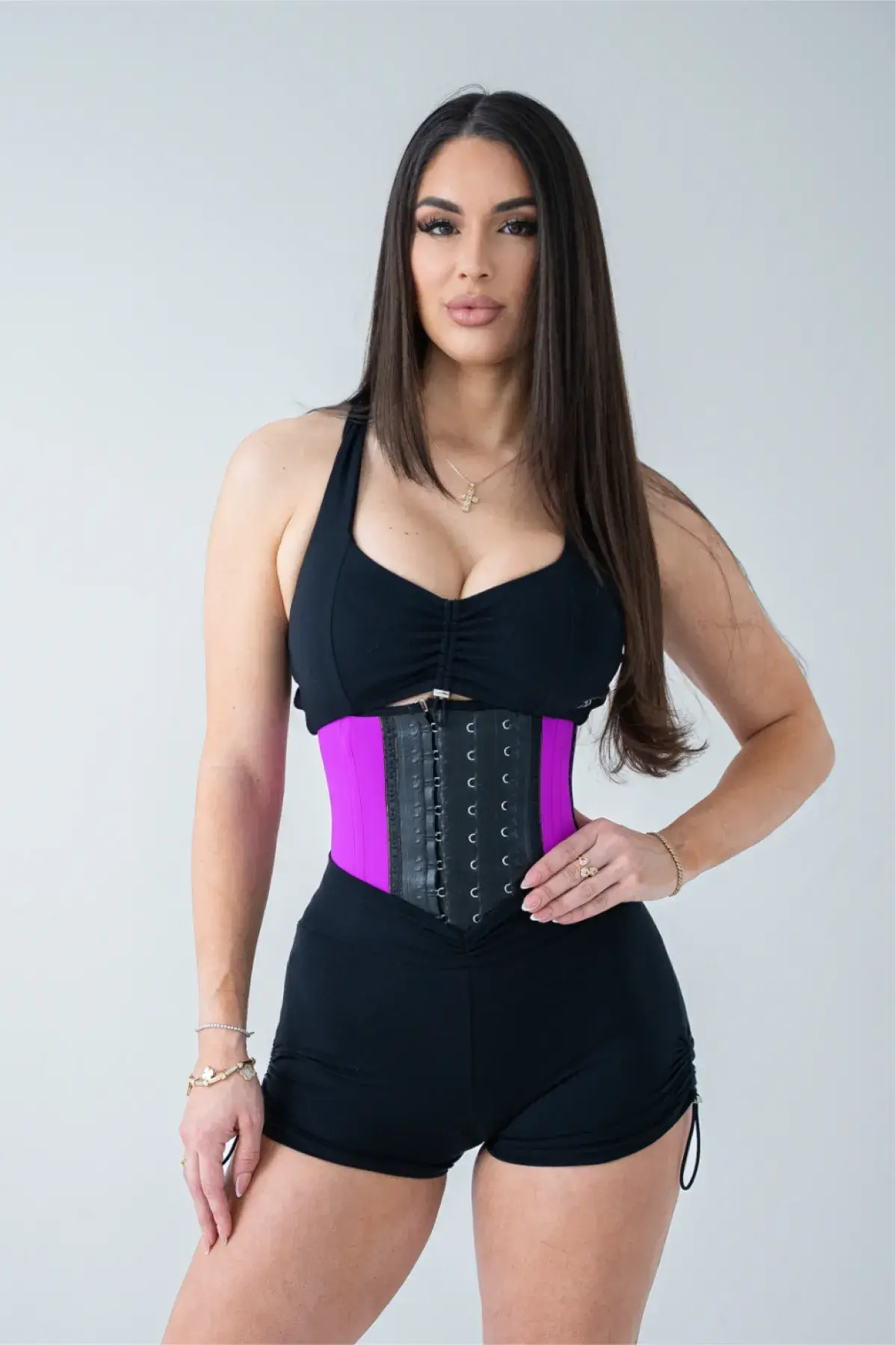
- The eye side has three rows of eyes running parallel to each other.
- Each row is a fit. Hooking into the outer row gives the most room. Each row in takes the trainer in a little more.
That's why the rows exist. A new latex trainer is at its stiffest, and it softens and loosens as it breaks in. Moving in a row keeps the same hold as the trainer relaxes, so you get more wear out of one size.
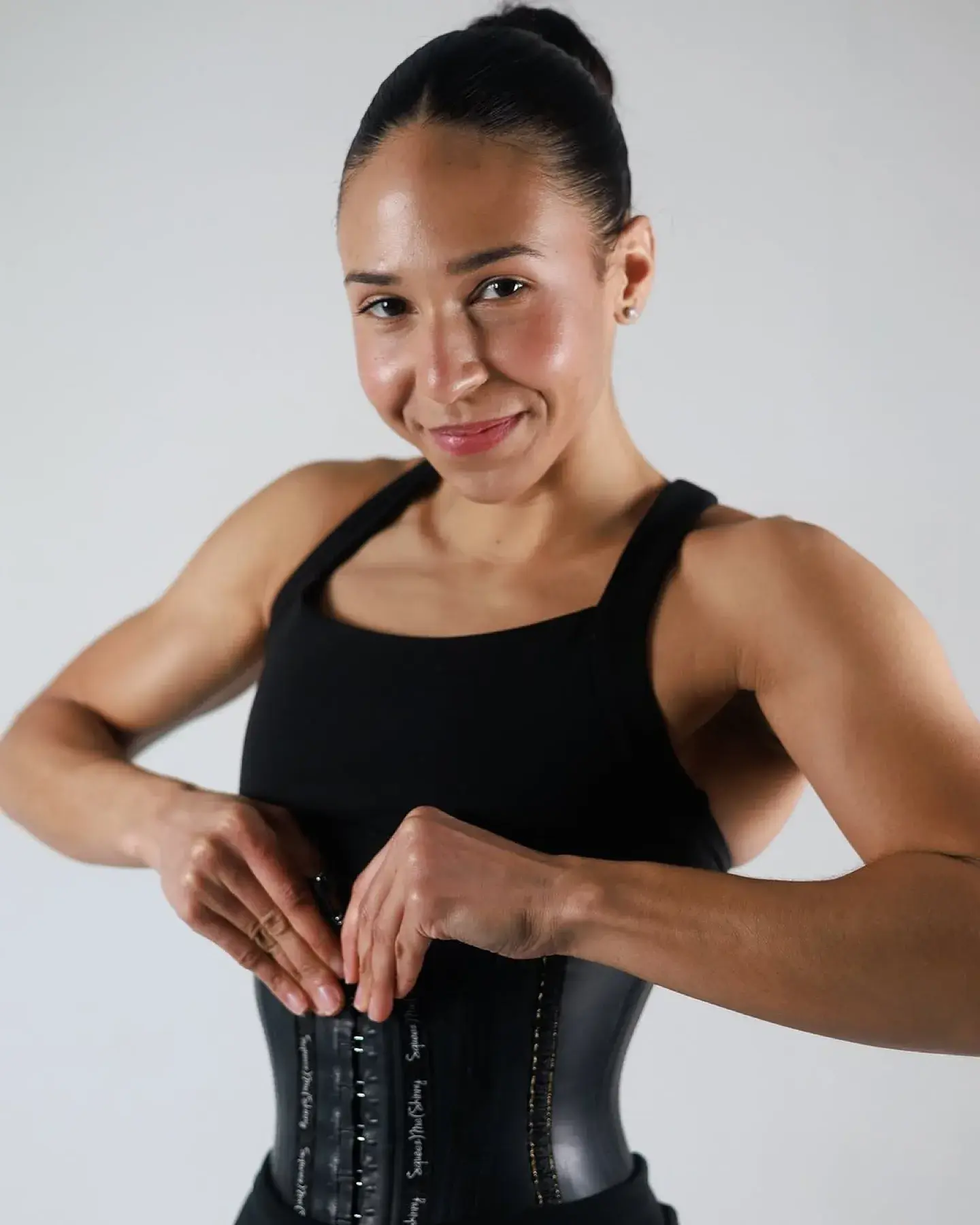
How to close a new waist trainer
- Put on a thin, fitted tank. It keeps the hook strip off your skin and helps the trainer slide into place.
- Wrap the trainer around you with the hooks at the front, sitting between your ribs and your hips.
- Hold the two front edges together low down with one hand.
- Close the bottom hook into the outer row first. The bottom is the narrowest part, so it's the hardest. Once it's in, the rest follow.
- Breathe out and close the next hook up. Keep going one hook at a time. Don't hold your breath.
- Pull the trainer down gently so it sits flat, then sit down and lean forward to check it doesn't dig in.
“So glad I purchased this waist cincher. At first it was difficult to get on but it does stretch a little, so don't give up. Great back support. So glad I got one”
When to move in a row
Move in one row when the row you're on closes easily and feels loose for the time you usually wear it. There's no set number of days. Then do the sit test again on the new row. If it pinches or you can't take a full breath, go back out. Treat the tightest row as room to grow into as the trainer softens.
Can you use different rows at the top and bottom?
You can. Some people close the bottom hooks on one row and the top hooks on another so the trainer follows their shape. That's fine as long as the front lies flat, the edges don't dig in and nothing pinches. If the trainer twists or gaps where the rows change, put all the hooks back on one row.
Hooks, zips and clips: how each trainer closes
| Trainer | Closure | Worth knowing |
|---|---|---|
| Active Sculpt and Active Sculpt Designs | Three rows of hooks | Flexible latex, easiest first trainer |
| Daily Sculpt | Three rows of hooks | Our firmest everyday latex |
| Neoprene Sweat & Sculpt | Three rows of hooks | Neoprene lining inside |
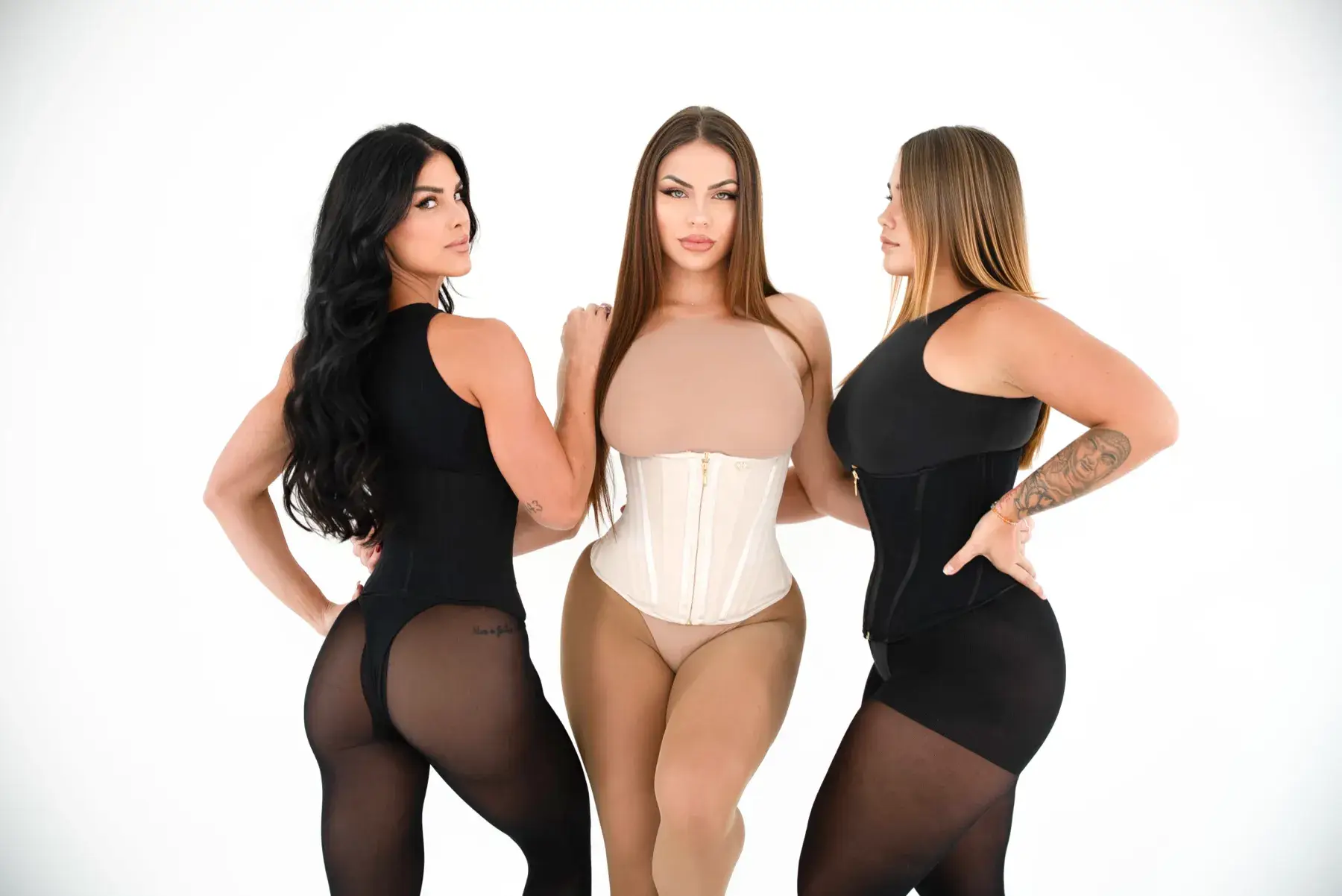
| Triple Compression | Front zip plus hook-and-eye rows | Our firmest hold, best once you're used to hooks |
| Luxx Hourglass | Outer zip, hook-and-eye and an inner band | Latex-free powernet |
| Invisible Zip & Clip | Zip and clip | Latex-free and low profile. Runs small, so order one size up |
Triple Compression adds a front zip to the hooks for a locked-in fit. It's the firmest trainer we make, so it's easier once you've learned to close a hook-front trainer like Active Sculpt or Daily Sculpt.
Why do my waist trainer hooks pop open?
- The bottom hooks pop when you sit. The trainer is probably too tall for your torso, and your hips are pushing the bottom edge up. A shorter length fixes it. See why waist trainers roll up.
- Hooks pop all the way up. The size may be too small, so every hook is under strain. Measure your natural waist again and check the chart.
- One hook keeps letting go. It may not be fully seated. Close it again and press it flat. If it's bent, it won't hold reliably.
- You just moved in a row. The new row might be too much for now. Go back out a row for another week or two.
Hooks pinching your skin?
Wear a thin tank or bodysuit under the trainer. Bare skin can catch between the hooks and the eyes as you close them, and a layer stops that. It also keeps sweat off the latex, which helps it last.
Bent or broken hooks
A trainer with bent, loose or missing hooks won't close evenly, and an uneven trainer puts pressure in the wrong places. If it's new, contact us and tell us which trainer and which hook. If it's well worn, it's usually time for a new one. Always close all the hooks before you hand wash a trainer so they don't catch and bend. Our cleaning and care guide covers the rest.
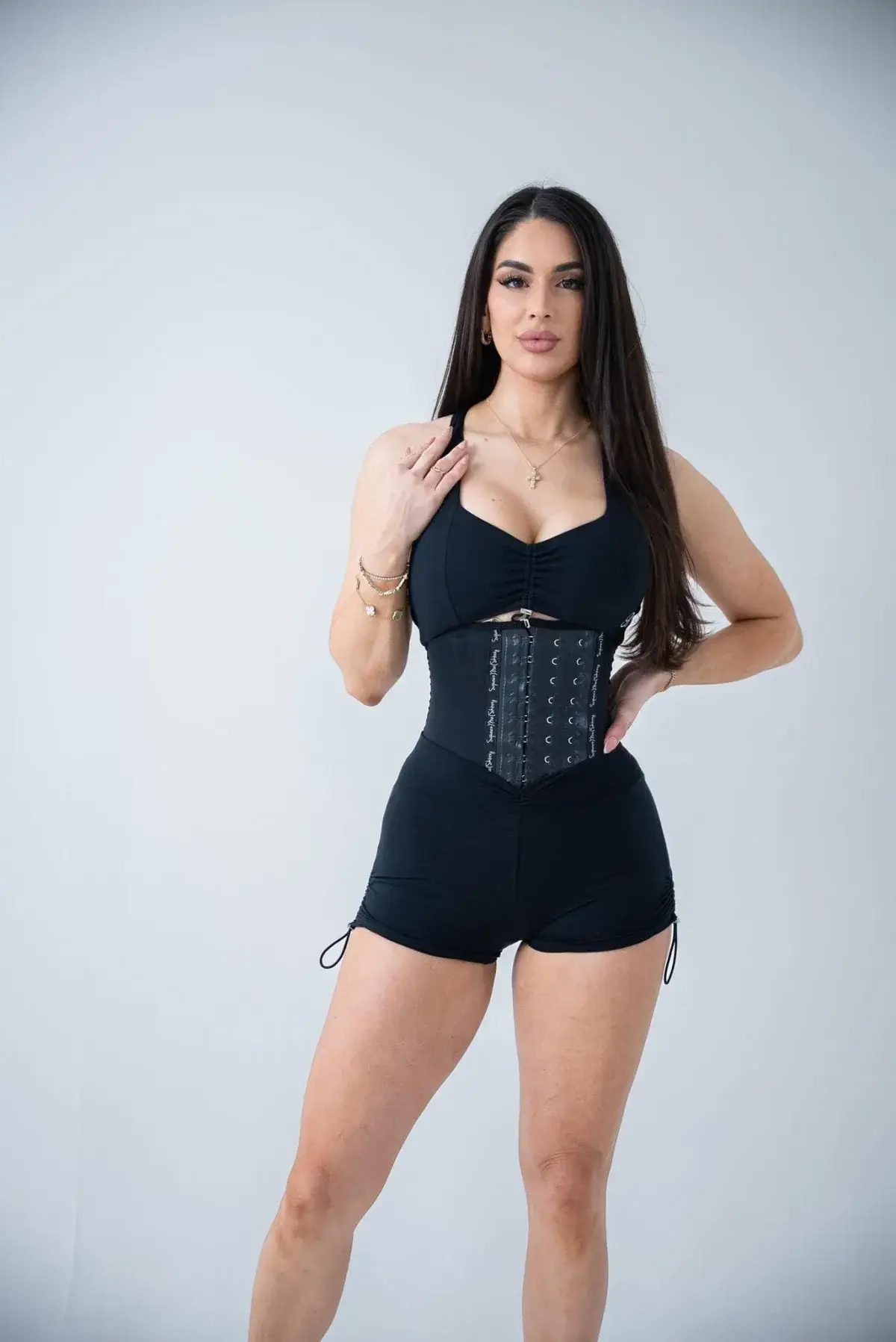
Hook-front trainers with three rows
Which row of hooks is the loosest?
The outer row. Hooking into it leaves the most room, so start there with any new trainer.
Do I hook a waist trainer from the top or the bottom?
From the bottom. The bottom hook is the hardest one to close, and once it's in, the hooks above it line up more easily.
Will the tightest row give me better results?
No. A waist trainer shapes your waist while you wear it on any row. The rows are there so the fit stays snug as the trainer softens, not to push for more compression.
How long before I move to the next row?
There's no set time. Move in when your current row feels easy for your usual wear time, and only if the next row passes the breathing and sitting test.
Why is my new waist trainer so hard to close?
New latex is stiff. Wear a thin tank, start at the bottom hook on the outer row and breathe out as you close each hook. If the outer row won't close at all, the size is likely too small.