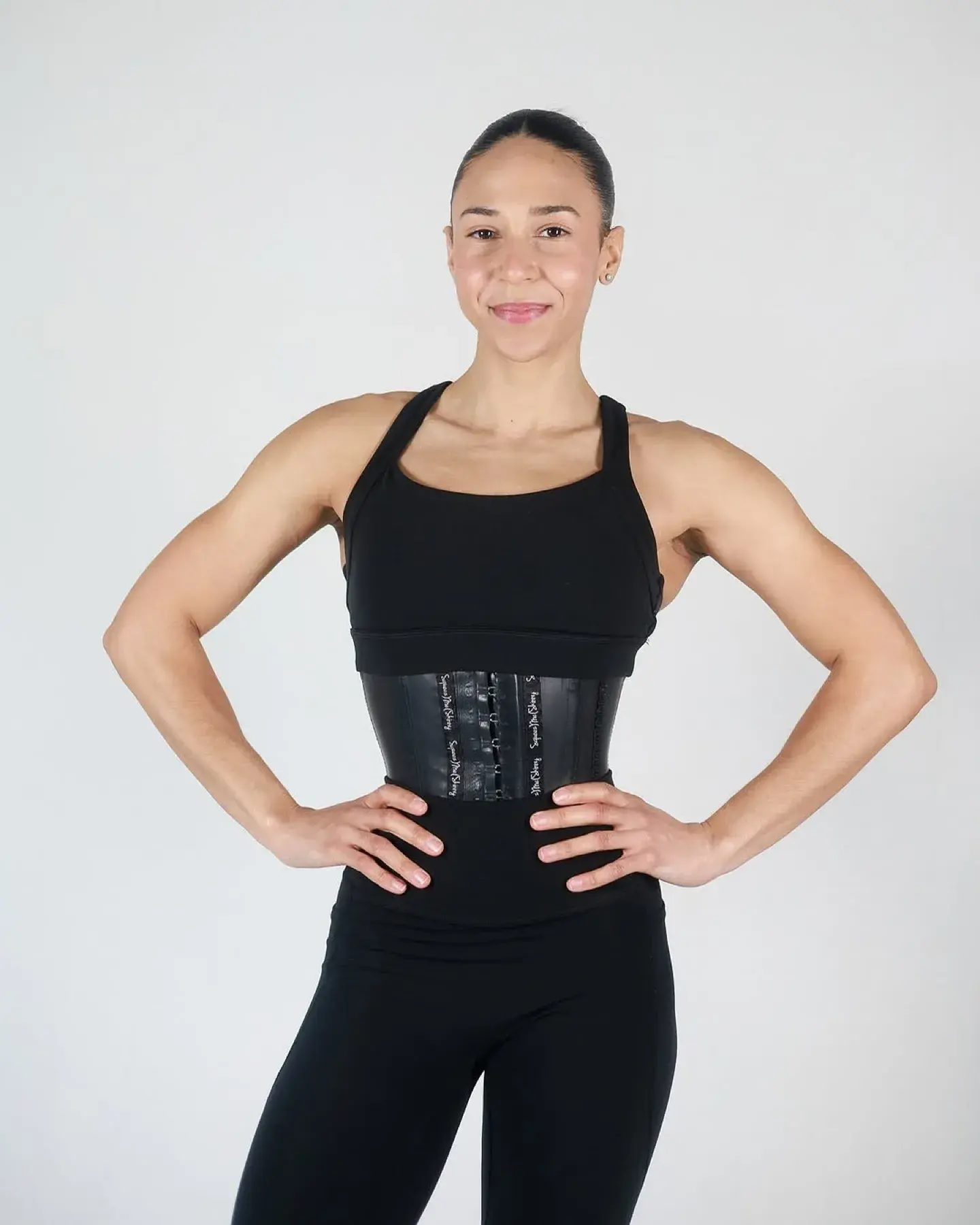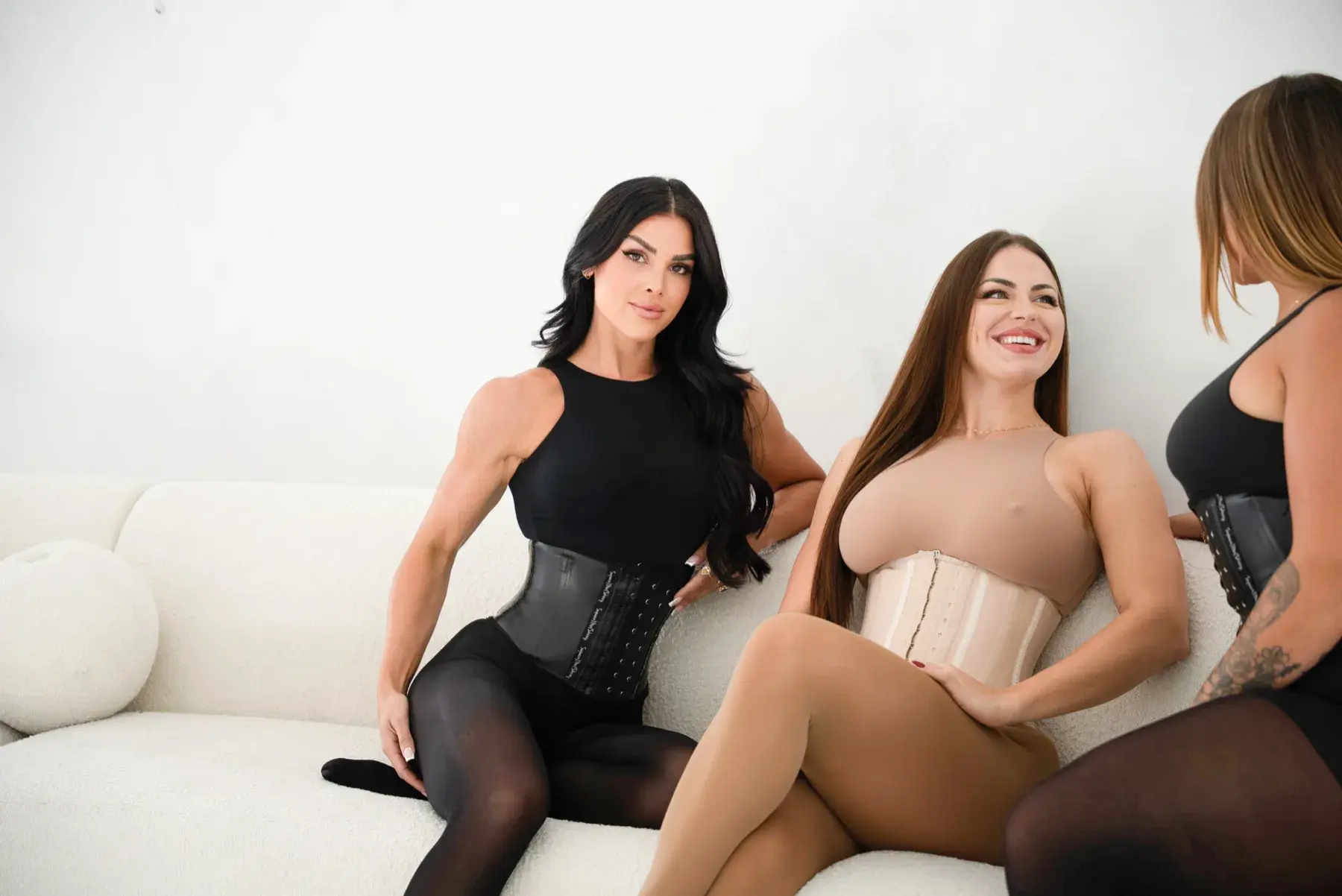
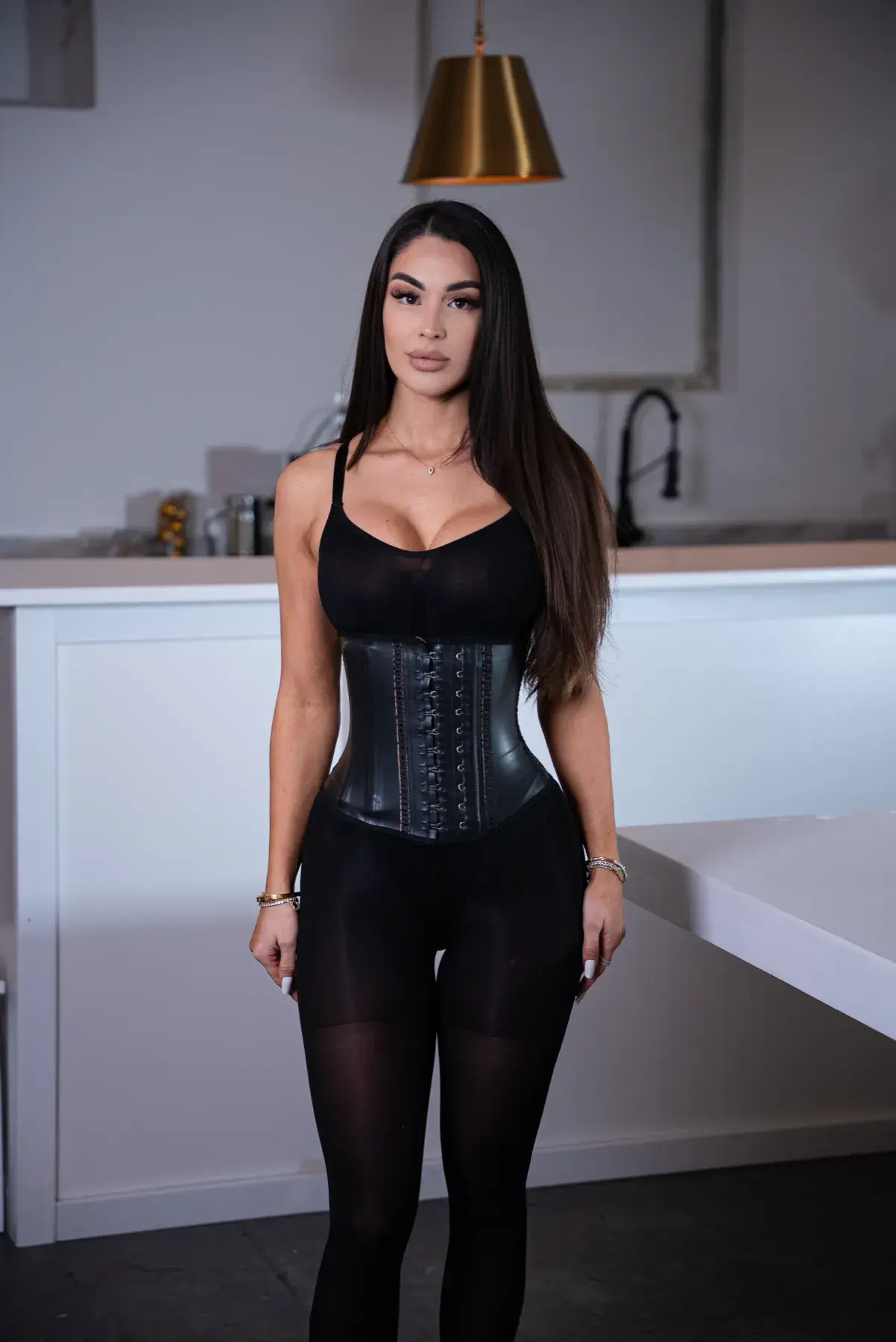
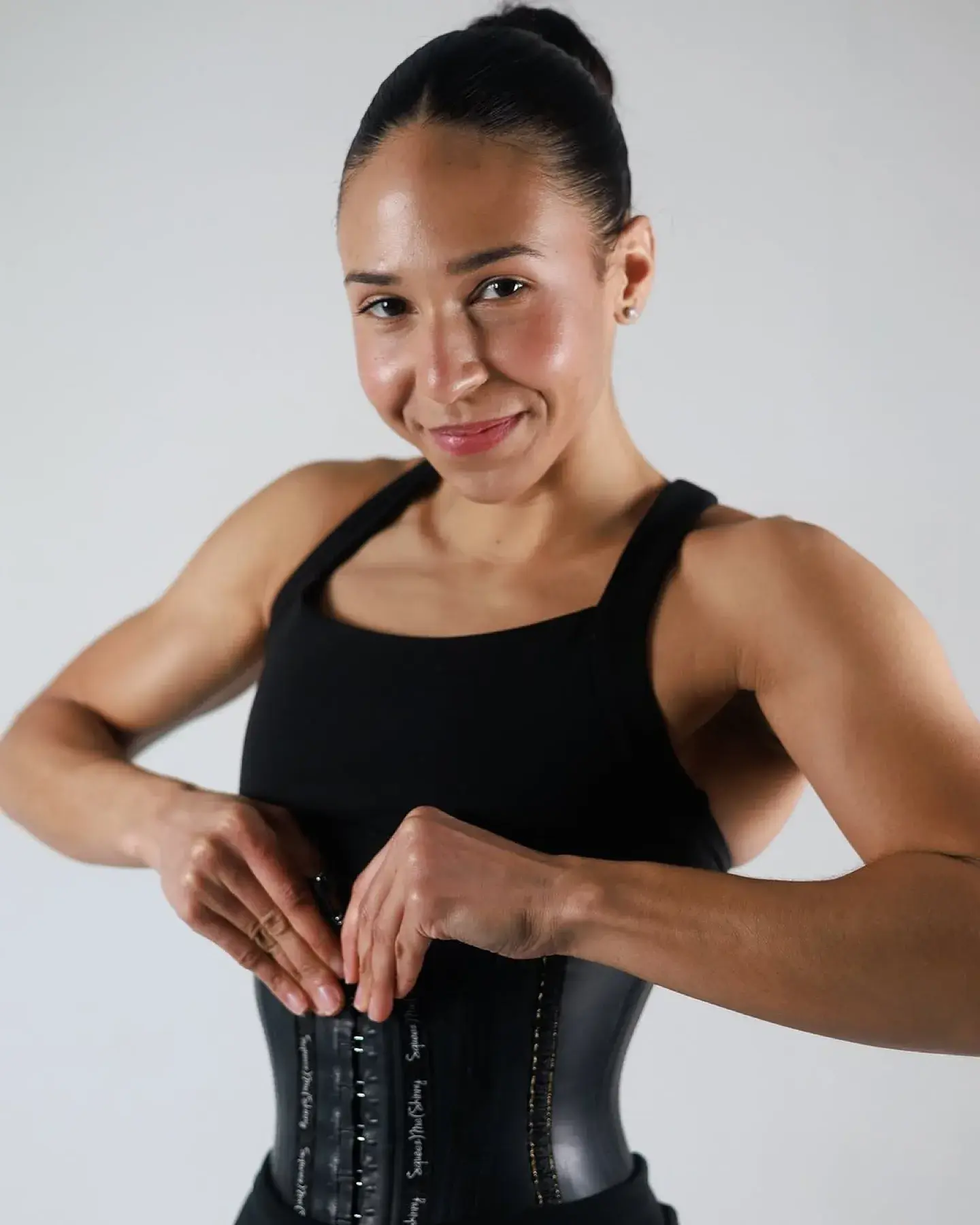
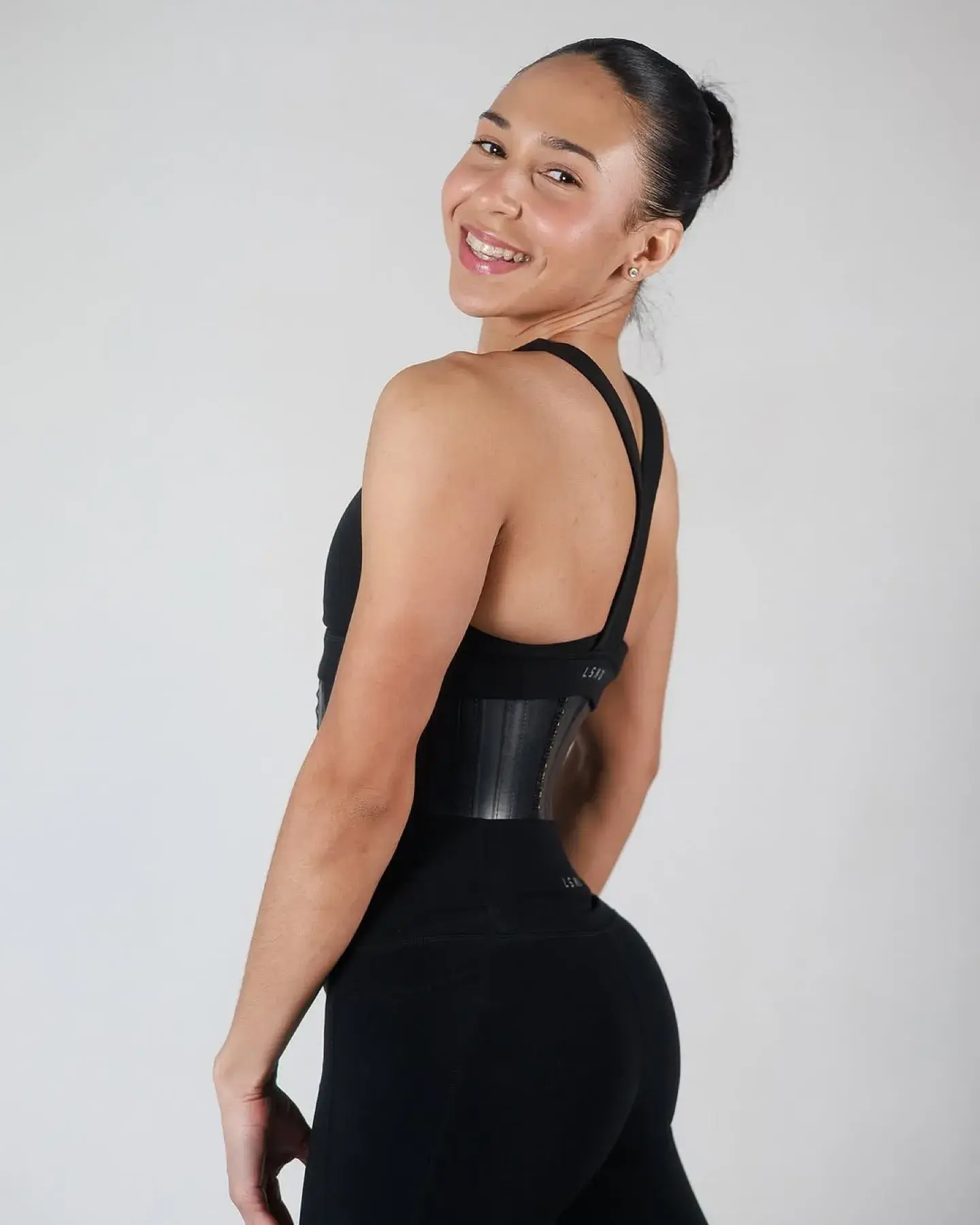
A waist trainer should feel snug and firm, like a strong hug around your middle. You should still be able to take a full breath, talk in full sentences and sit down without it digging in. If it hurts, makes you short of breath, or leaves you numb or tingly, it's too tight. Start on the loosest row of hooks and move in only when that row feels easy.
Tightness depends on two things: your size and the row of hooks you're on. If you haven't settled your size yet, start with what size waist trainer to get. This post is about how it should feel once it's on.
The right feel
- Firm: you feel held all the way around, and the trainer doesn't slide when you move.
- Flat: it lies smoothly from top to bottom without rolling or bulging at the edges.
- Comfortable enough to forget for a while: you notice it, but it doesn't take over your attention.
A brand-new latex trainer will feel firmer than it will after a few wears. Some pressure is the point. Pain isn't.
“It’s so comfortable I forget I’m wearing it”
The breathing and sitting test
Do this every time you hook in, and every time you move to a tighter row.
- Breathe. Take a slow, full breath in. You should be able to fill your lungs without straining.
- Talk. Say a couple of full sentences out loud. You shouldn't need to stop for air.
- Sit. Sit down on a chair for a minute. The trainer shouldn't press hard into your ribs or hips.
- Bend. Lean forward a little, as if to pick something up. It should move with you without pinching.
If any step fails, go back one row of hooks. If it still fails on the loosest row, the size or length may be wrong. A trainer that digs in when you sit is often too tall for your torso; see why your waist trainer rolls up.
Which hook row to start on
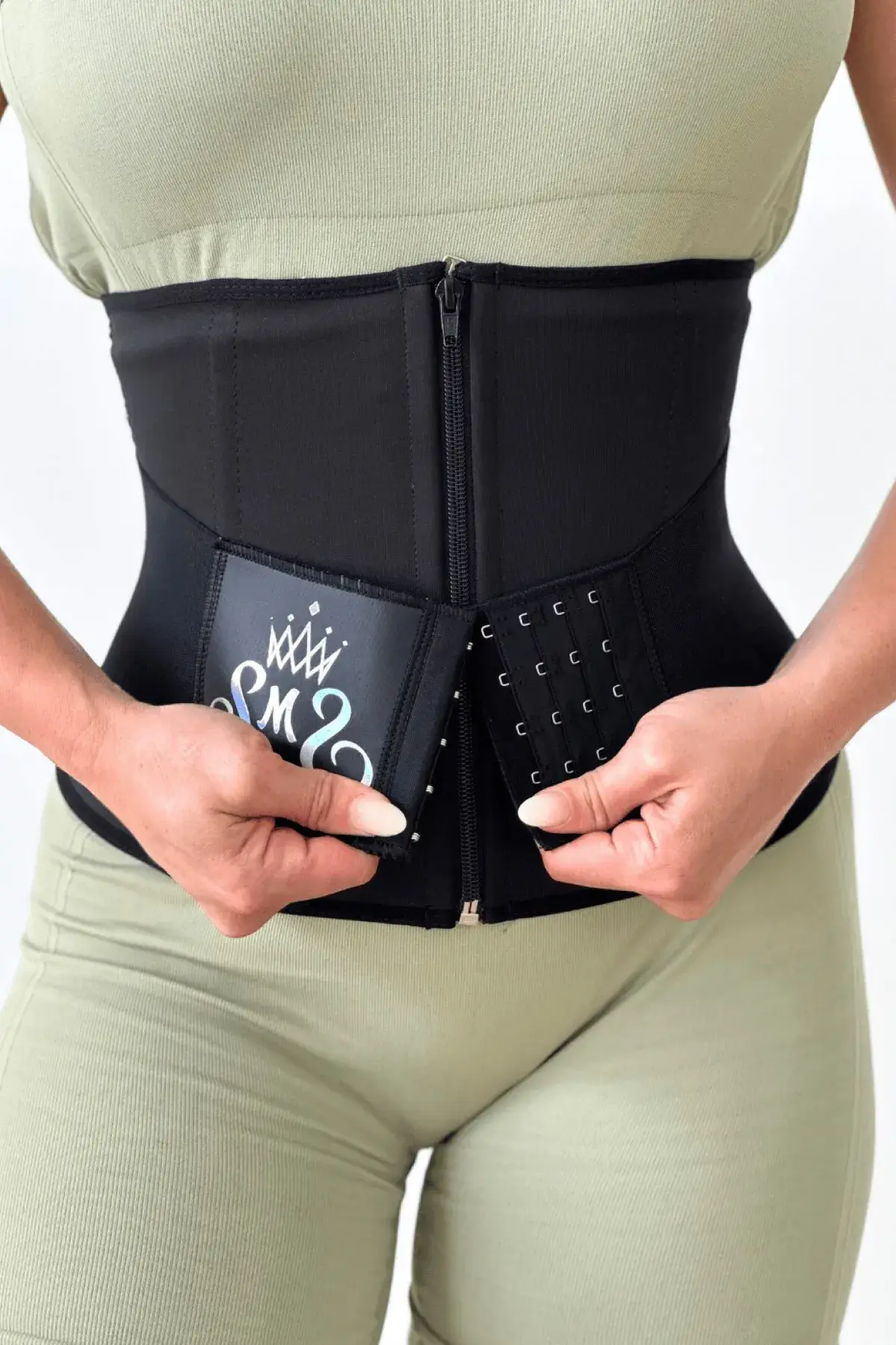
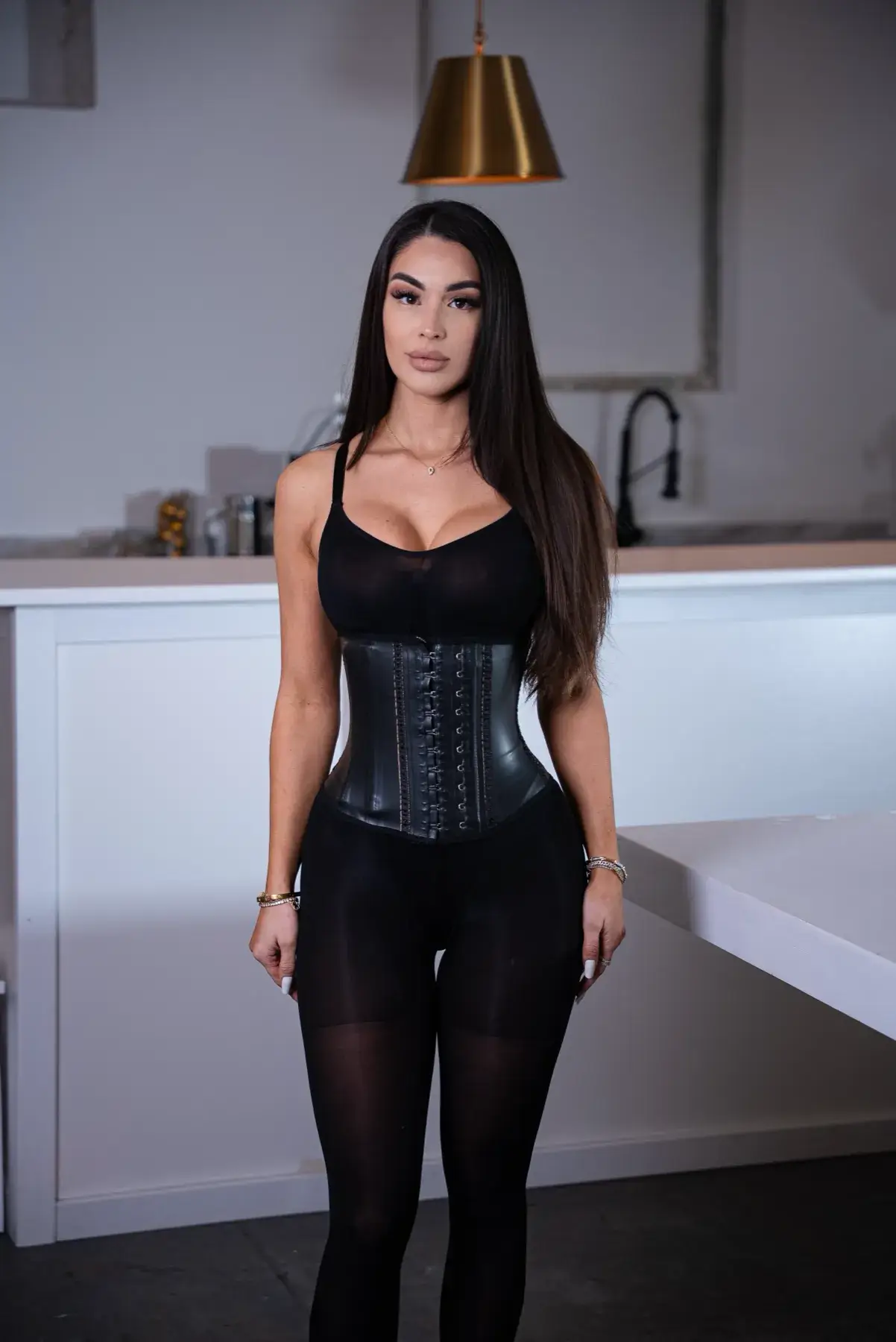
Always start on the loosest row, even if the next one closes. Most of our latex trainers have three rows of hooks so you have room to move in later. Starting loose gives the trainer time to soften and gives your body time to get used to the compression.
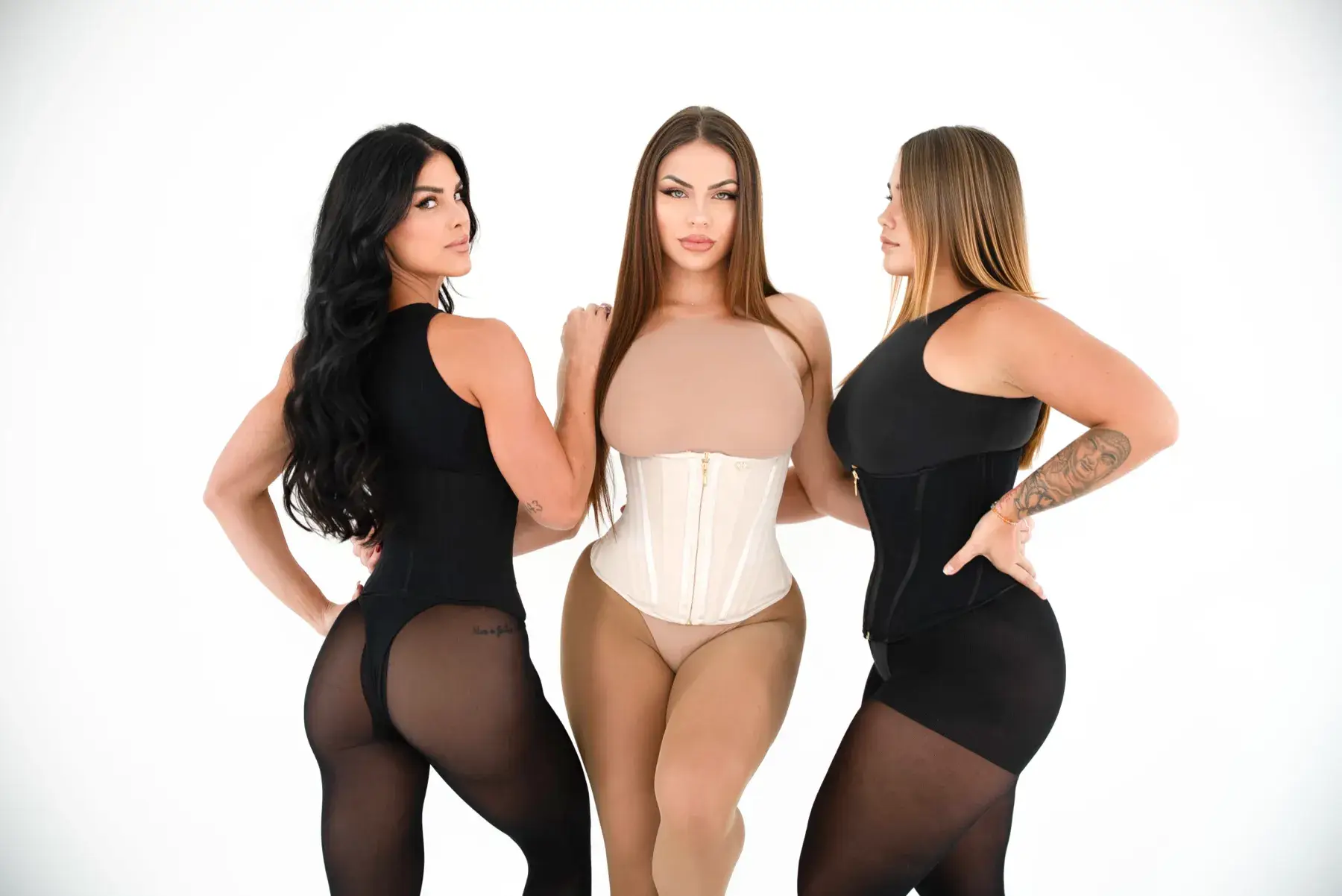
Trainers with three rows of hooks
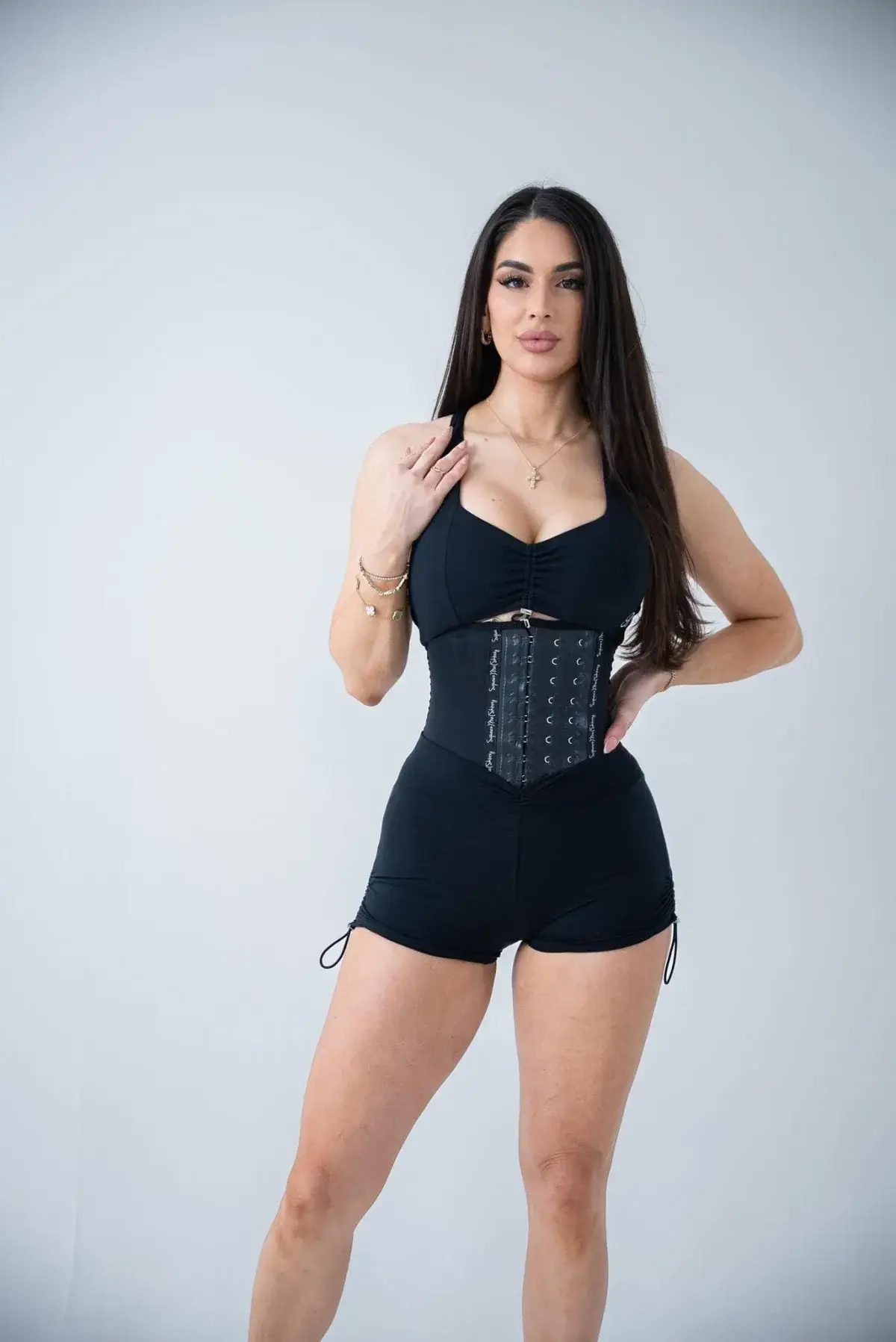
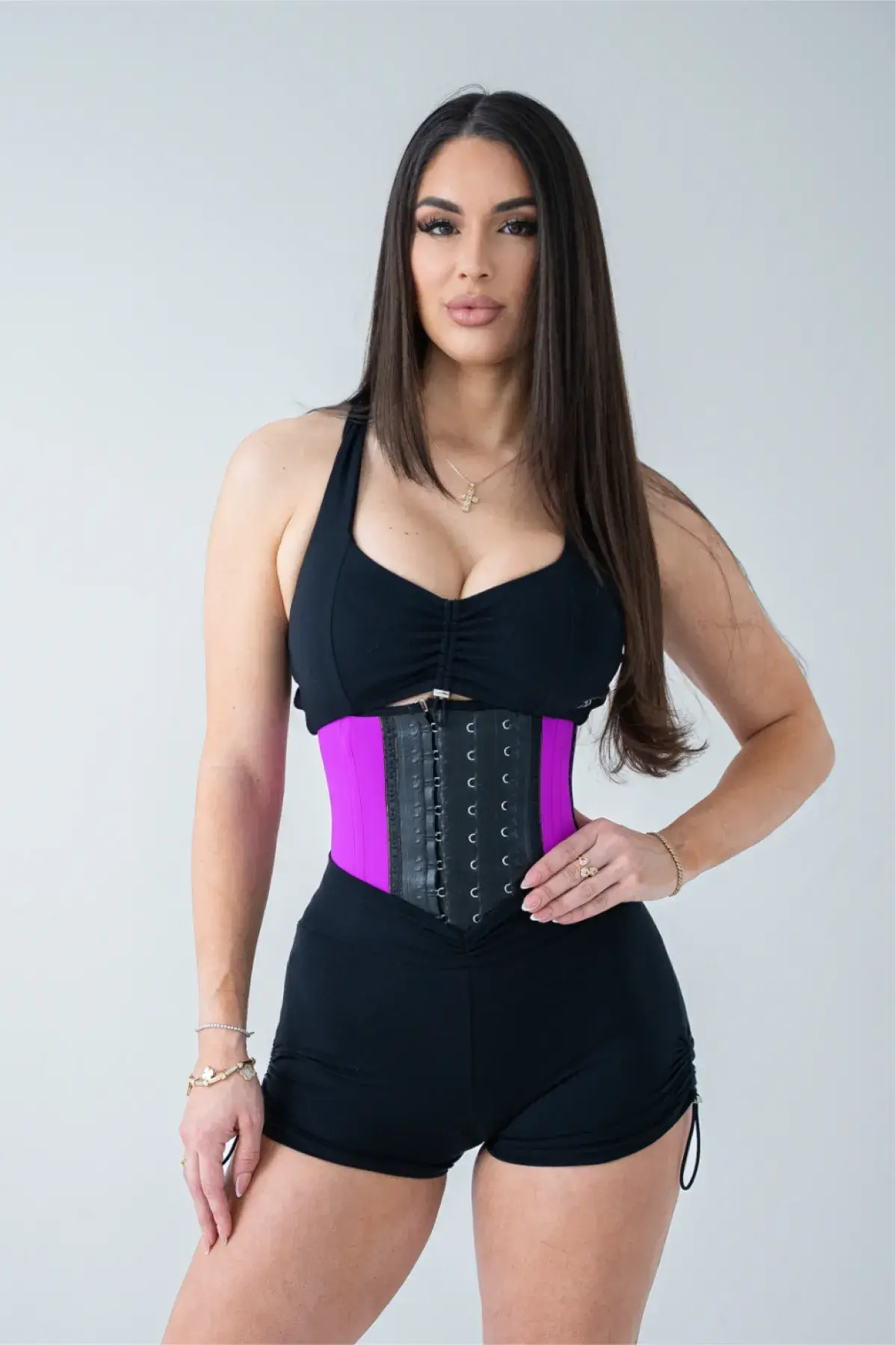
When to move in a row
Move to the next row when the current one feels easy for the time you usually wear it, and the trainer has started to feel looser. There's no set number of days. Do the breathing and sitting test again on the new row. If it fails, go back out. There's no prize for getting to the tightest row.
Building up wear time works the same way: slowly, and only while it's comfortable. Our post on how long to wear a waist trainer has a simple plan, and the how to wear a waist trainer guide covers the rest.
Signs it's too tight (stop and loosen)
Loosen it or take it off right away if you notice:
- Pain or sharp pinching
- Numbness or tingling, anywhere
- Shortness of breath, or not being able to take a full breath
- Dizziness or feeling lightheaded
- Heartburn, reflux or feeling sick
- Red, itchy or irritated skin, or marks that hurt or don't fade
Cleveland Clinic notes that a waist trainer squeezes your ribs and can make breathing harder, and advises stopping if you get more reflux than usual, food coming back up, difficulty breathing or swelling in your legs. If a symptom doesn't go away after you take the trainer off, see a doctor. If your skin reacts, you may be sensitive to latex. Stop wearing it, ask your doctor, and look at our latex-free waist trainers.
If it's still loose on the tightest row
Trainers soften as they break in, so a trainer that started firm can feel looser after a while. If you're on the tightest row and it slides, twists or no longer feels like it holds you, it may be time to look at the next size down. Measure your waist again and check the chart for your trainer in the waist trainer size chart.
If you want more hold rather than a smaller size, a firmer line may suit you better. The Triple Compression is our firmest trainer, with three layers, a front zip and hooks, and it's best once you've worn a trainer before. Compare it in triple compression and everyday waist trainers.
 Triple Compression Waist TrainerThree layers, a front zip and hook-and-eye rows. The most hold we make, for experienced wearers.From $98Shop
Is it normal to feel squeezed?
Yes. Firm pressure is what a waist trainer does. Pain, numbness or trouble breathing are not normal; loosen it or take it off.
Should it leave marks?
Light lines from the seams that fade soon after you take it off are common with any snug garment. Marks that hurt, stay, or come with redness or itching mean it's too tight or your skin is reacting. Take it off.
Can a trainer be too tight to be safe?
Yes. Pain, numbness, dizziness or breathlessness mean take it off. If you're pregnant, postpartum or managing a medical condition, ask your doctor before wearing one.
Should I size down for a tighter fit?
Only if you've worn a trainer before and want a snugger hold. For your first trainer, sizing up between sizes is easier. Our post on what size waist trainer to get explains why.
Results vary. Waist trainers provide temporary shaping while worn and work best alongside regular exercise and balanced nutrition. Not a medical device. Consult a healthcare provider if you are pregnant, postpartum, or managing a medical condition.